Craft
Revision in passes: one problem at a time
How to run a revision pass: pick one problem, such as dialogue, read the whole manuscript for it alone, and leave the rest untouched until the bigger structural work is done.
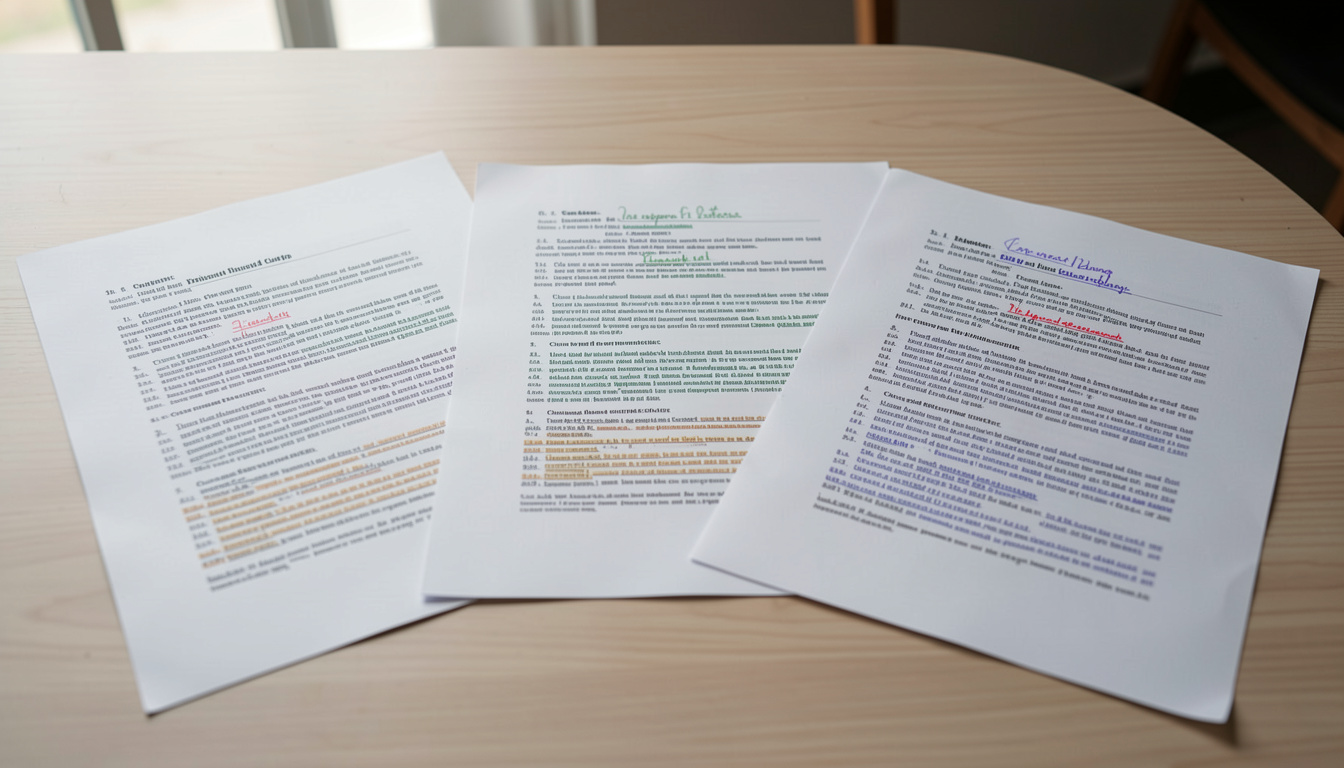
A revision pass is one trip through the whole manuscript with one job: you hunt a single kind of problem and leave everything else alone. Attention is a narrow tool, and the alternative, fixing everything at once, tends to leave a draft correct and lifeless instead of better.
One read, one charge
A pass looks small on purpose. You decide that this week you read for dialogue and nothing else. Each time a character speaks, you ask whether the line could belong to anyone else in the book; when it could, you mark it and move on. You do not fix the comma in chapter nine, because that comma sits in a scene that may not survive the plot pass you have not run yet.
That is the quiet logic of the method: structure first, surface last. If a chapter is going to be cut, every hour spent polishing its sentences is thrown away, so the passes that move big pieces come before the passes that sand them down.
Why does the first reread hurt so much?
The first reread is not a pass. The agent who writes Kidlit.com has a name for the mood of the drafting months, the "first draft goggles": while you spill words and let your imagination roam, everything looks fine. Take the goggles off and the same pages show typos, dialogue that lies flat, characters repeating the same gesture, five pages spent on a love interest's eyes while the protagonist never gets a face, a middle where five chapters pass with nothing but driving and banter, and an ending that either fades out unresolved or detonates.
Read that manuscript once with a notebook and no pen in hand. What you write down is the list of your passes.
Where the order comes from
No rule fixes the order of the passes, but it is not arbitrary. The elements of craft pile up from structural to cosmetic, and Kidlit.com walks them in the order it plans its own revision coverage: character first, then plot, then dialogue, then description, then voice, with tweaks and smaller repairs last. Character leads because every later question depends on knowing who these people are and what they want.
Each pass needs one question you can answer as you read:
- Does every scene teach something new about a character or a piece of the plot?
- Does every chapter move the story forward?
- Does every sentence earn its keep and justify staying in the draft?
- Does each plot and subplot arc and resolve by the end?
- Do the emotions rise and fall through the book instead of sitting at one level?
How long should all of this take?
Longer than the draft. The writers who tell Kidlit.com how they work say they spend three to five times as long revising as they spent writing the first version, and much of that goes into getting the manuscript clean enough to hand to critique partners and beta readers, after which they revise again. For a writer with a job and a few evening hours a week, the pass is the format that fits that reality: one problem, one circuit of the book, then stop.
What about when an agent has your full?
The request changes the pressure, not the work. A writer asked the site just this: an agent has my full manuscript, revisions will take a while with little free time, is that troublesome? The answer applies to writers who have an agent as much as to writers still looking. No writer should sprint on an agent's account, and revising while your full is out is a case for taking more time, not less, when more time is what a strong revision needs.
The reason is blunt. A finished manuscript shows writing, but it only lets an agent guess at how its author revises, and in that agent's experience that ability is the biggest unknown at the start of the relationship. More clients are dropped over revision than over any other single issue, which is worth knowing before you puzzle over how agents and editors read a submission.
The polished opening trap
Passes also protect you from a habit the submission side sees constantly. Conferences, workshops and critique groups, in the Carolinas as anywhere else, usually work on the first ten, fifteen or twenty pages: the chunk fits a meeting and the first pages carry the weight. A writer can cycle those pages through critique partners for a year and end up with an opening far better than the book behind it. At one agency desk, where queries arrive with the first ten pages attached, the pattern repeats: samples keep getting more polished, and the manuscript tends to fall apart once the reader gets past them. An agent won over by a strong opening expects the rest to get better, not worse.
A pass has no blind spot like that. Its unit is the whole manuscript, so twenty pages of shine cannot outvote the middle.
Can you revise a manuscript to death?
The same agent says yes, and puts the blame somewhere unexpected: hurry. A manuscript can be revised to death when you stare at it too hard, or not hard enough, and sand the voice, the freshness and the spontaneity out of it, which is what hurry produces. The more common problem runs the other way, though: writers more often revise too little than too much.
The rhythm that avoids both ends is unglamorous. Revise more than you think you need to, put the manuscript away, come back to it in three months, revise again. If you have grown sick of the thing, the site suggests cheating on it with a new project: the energy of the new pages tells you whether the old book returns to the desk or goes in the drawer for good.
Read once, for one thing
So run one. Pick the problem you already half suspect, the shrug every character makes or the middle that goes quiet, and give it a whole sitting. Take paper or a highlighter, open at page one, and read to the end marking only that problem: no retyping, no query letter, no lingering in pages you like. What you hold at the end is a map of one flaw across the whole book, and a map like that can be worked through in a single session. Fix what it shows, then choose the second problem and start the second pass.
Two newer pieces extend the same discipline in different directions: our piece on what the pulps still teach applies it to dialogue and stakes, and researching a period world applies it to the facts a historical novel has to get right.
Kidlit.com
Kidlit.com is a website about writing and publishing for children, written by a literary agent who reads queries at an agency desk. Its revision pages answer questions sent in by writers, from handling a full manuscript request to how much revising is normal, and they walk the elements of revision in order, from character down to small tweaks.