Section 02 · Illustration
Illustration and portfolio for picture books
What a dummy is, how a picture book is paced across spreads, and what an illustration portfolio is judged on when an art director opens it.
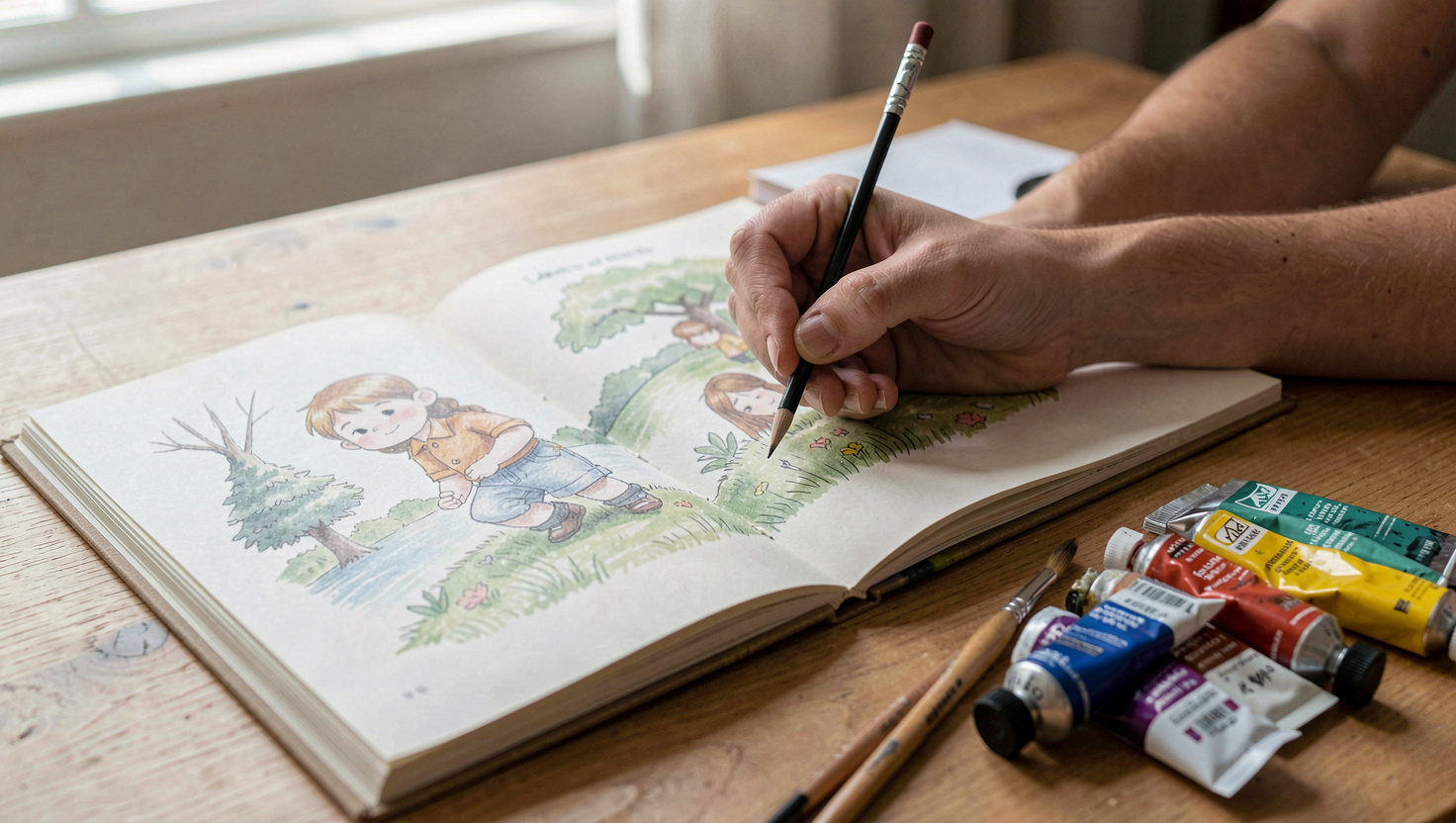
Picture books are sold two ways: as a text alone, or as a package where one person does both the words and the pictures. If you draw, or think you might, the package route changes everything about how you prepare your work, what an agent looks for, and what you send. Here is the working vocabulary of the author illustrator, drawn from what one literary agent has published about how these projects actually get made.
Why agents like the whole package
A text-only picture book is, by itself, incomplete. It still needs an illustrator, and making that match falls to an editor and to chance. The agent writing at kidlit.com on illustration clients describes this plainly: when an editor buys from an author illustrator instead, the dummy already shows what the finished book will be, and the publisher works with one creator rather than two. The text, the art, the interplay of word and image, the design: the whole thing is there in the submission. That is why, in her experience, agents and editors prefer author illustrator projects by a wide margin. Text-only sales still happen every day, but the combined project is the one that makes the buying decision simpler.
An illustrator first, a writer second?
According to her account, most of her author illustrator clients came to books as artists first and writers second. The reason is practical. An agent whose expertise is text can help a client improve storytelling, structure and writing. What that agent cannot do is teach someone to draw. She says it directly: the art mastery has to be there before she signs a picture book illustration client. Adding writing to an illustrator's toolbox is feasible; adding illustration to a writer's is, in her view, much harder. Writers who want to take up art to become illustrators face competition from artists trained in BFA and MFA programs, people who have spent years studying illustration alone.
What the agent actually does for an artist
For an author illustrator, the agent's editorial work looks a little different from the work on a novel. She comments on composition, image choice, character, expression and color. She develops the project with the client, works up a submission plan, and connects the client with editors. On top of that comes a second job: rustling up illustration work, pairing the artist with texts that need art. She calls this very tough going for most agents and most illustrators, because so much of the pairing is luck and timing. An editor sees a sample postcard with a dog on it, remembers a text that needs a great dog character, and a match is made. Some editors hold an artist's postcards or a portfolio link on file and hunt tirelessly for the right text.
How does the submission itself travel?
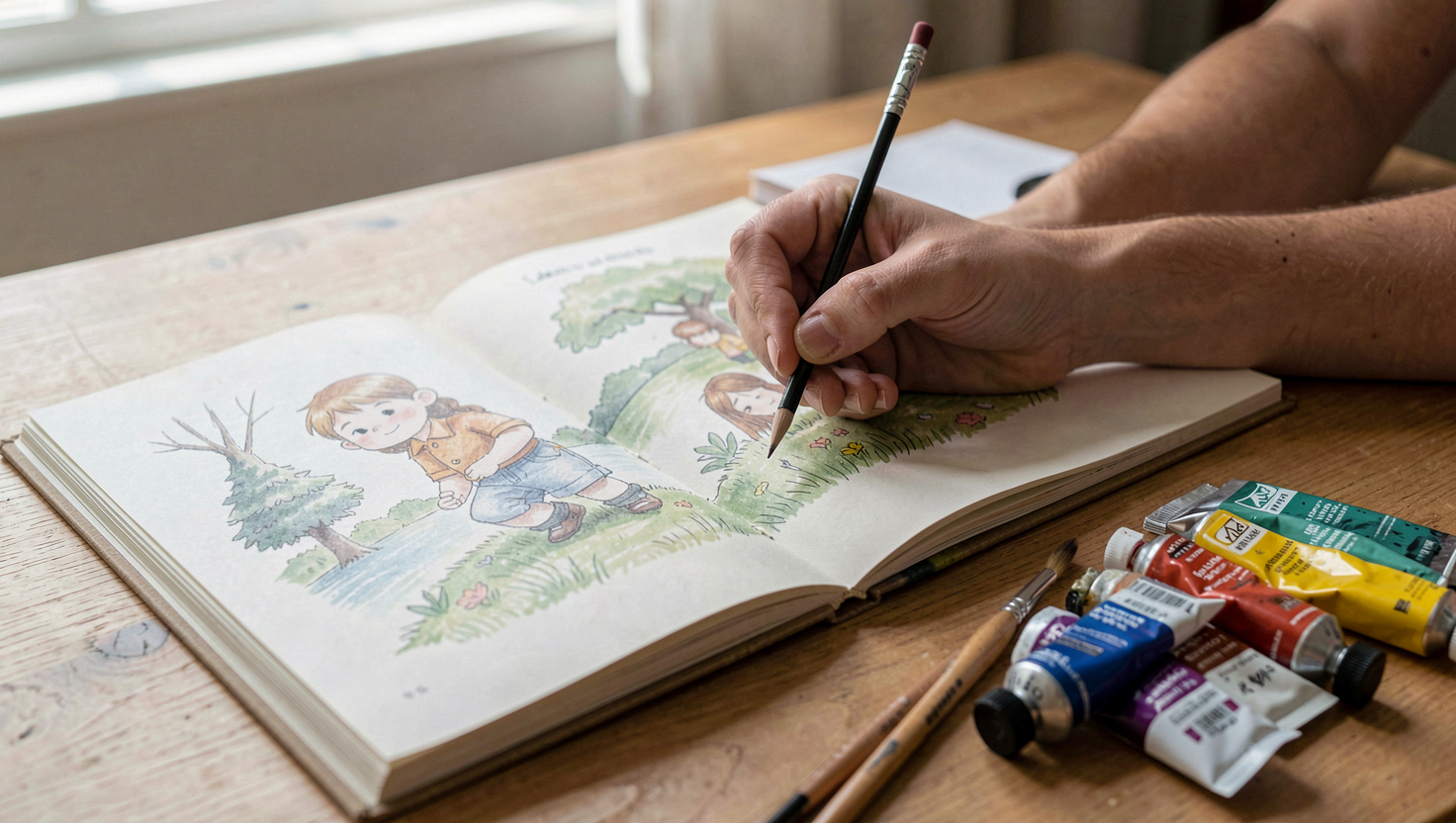
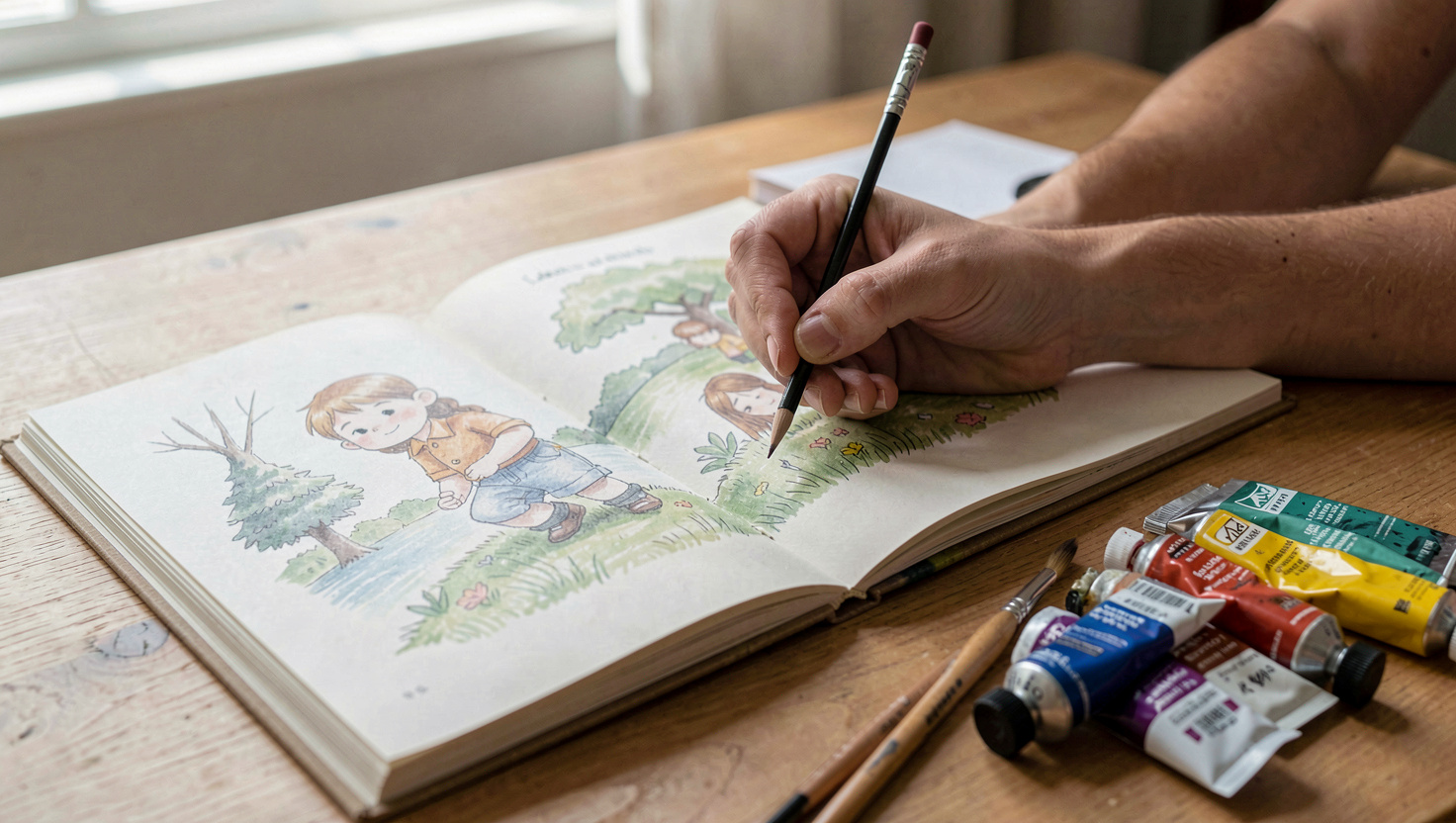
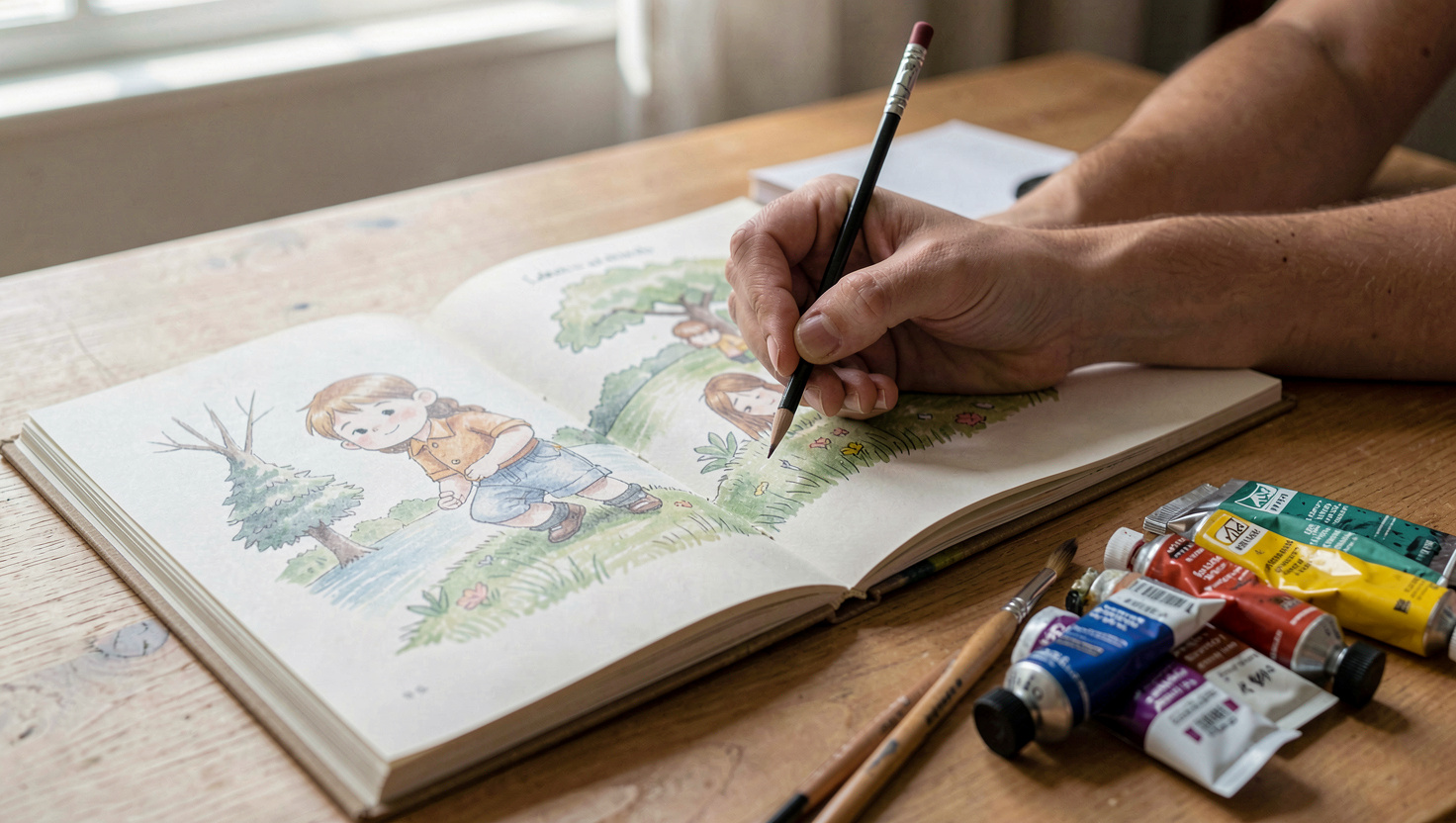
For an author illustrator project, this agent typically sends editors a full sketch dummy, two to five mock finishes, which are full color renderings of sketches, and the manuscript text. The package goes out either as a physical mailed submission, when the art benefits from being spread out on a desk, or as a digital PDF. Her agency's query guidelines add one wrinkle worth knowing: they do not accept attachments with queries. Instead, you paste the query and the full picture book text into the email, mention that you are an author illustrator, and include a link to your online portfolio. If she likes the art style, she asks for the dummy, and the attachment becomes possible then.
If you are building this kind of submission from scratch, start with the vocabulary of the format itself: what a dummy is and who is expected to make one.
Do you really need an online portfolio?
Yes, and she is blunt about it. Every illustrator needs an online portfolio, even one that is simple or built by someone you pay, provided you can update it easily with new images. As for contents, she gives a rough shape: about ten to twenty strong examples showing your range. Characters, some micro scenes that focus closely on one or two things, some macro images that capture a wide scope of action in one picture, settings, animals. The point is to demonstrate range, not volume. For the same reason, she and her colleagues get work in front of editors through postcard mailings and monthly digital art mailings, and editors, in her telling, love having both hard copy postcards and portfolio links.
Starting out, and the question of credits
Does a debut need to prove herself first as a writer or as an illustrator? On the companion page she answers: it depends. A genuinely commercial author illustrator project can sell from a debut. Illustration credits help you enter the marketplace, and the illustration deal is the more common first step, but she does not think prior credits are necessary to land an author illustrator book. The material also carries a sober warning for anyone imagining illustration as a shortcut: houses have stables of illustrators they already work with, and a newcomer sending postcards sits at the outermost layer of an editor's consideration, behind the famous names, the house regulars and the postcards already on file. Every route into children's publishing is difficult, and illustration is not a secret backdoor.
For the broader landscape of who does what between you, an agent and an editor, see our guide on whether you need an agent.
One honest limit of the material
What the pages do not give you is a number. No acceptance rate, no timeline from query to deal, no figure for how often a postcard turns into work. The agent speaks of luck, timing and consistency without attaching statistics to any of them, and this magazine will not invent any. What she does offer is a directional claim she repeats: agents and editors prefer author illustrator projects, and if you do not have a dummy yet, her closing advice is to get to work on one.
Your desk this week
Pick one move and make it. If you draw and have no portfolio, build the simple version this week: a page you can update yourself, holding your strongest pieces, aiming for that ten to twenty image range across micro scenes, macro scenes, characters, settings and animals. If you already have a portfolio, spend a few hours in the picture book section of a bookstore and study what the professionals are doing, since even the simplest looking styles carry a lot of artistry behind the scenes. And if a story is sitting in your drawer, mock it up: paginate it into a dummy, render two or three spreads in full color, and you will have the exact package an agent can send.
A newer piece covers the most ordinary garment in the field: drawing denim and workwear honestly reads the spec sheet for the overalls and jeans a picture book farm kid wears.
About kidlit.com
kidlit.com is a website on writing and illustrating for children, run by a literary agent. Its illustration pages cover how agents represent author illustrator clients, what goes into a submission dummy, how online portfolios are built and used, and how illustrators land work. The material cited here consists of the site's published pages on these topics.
In this suite
-
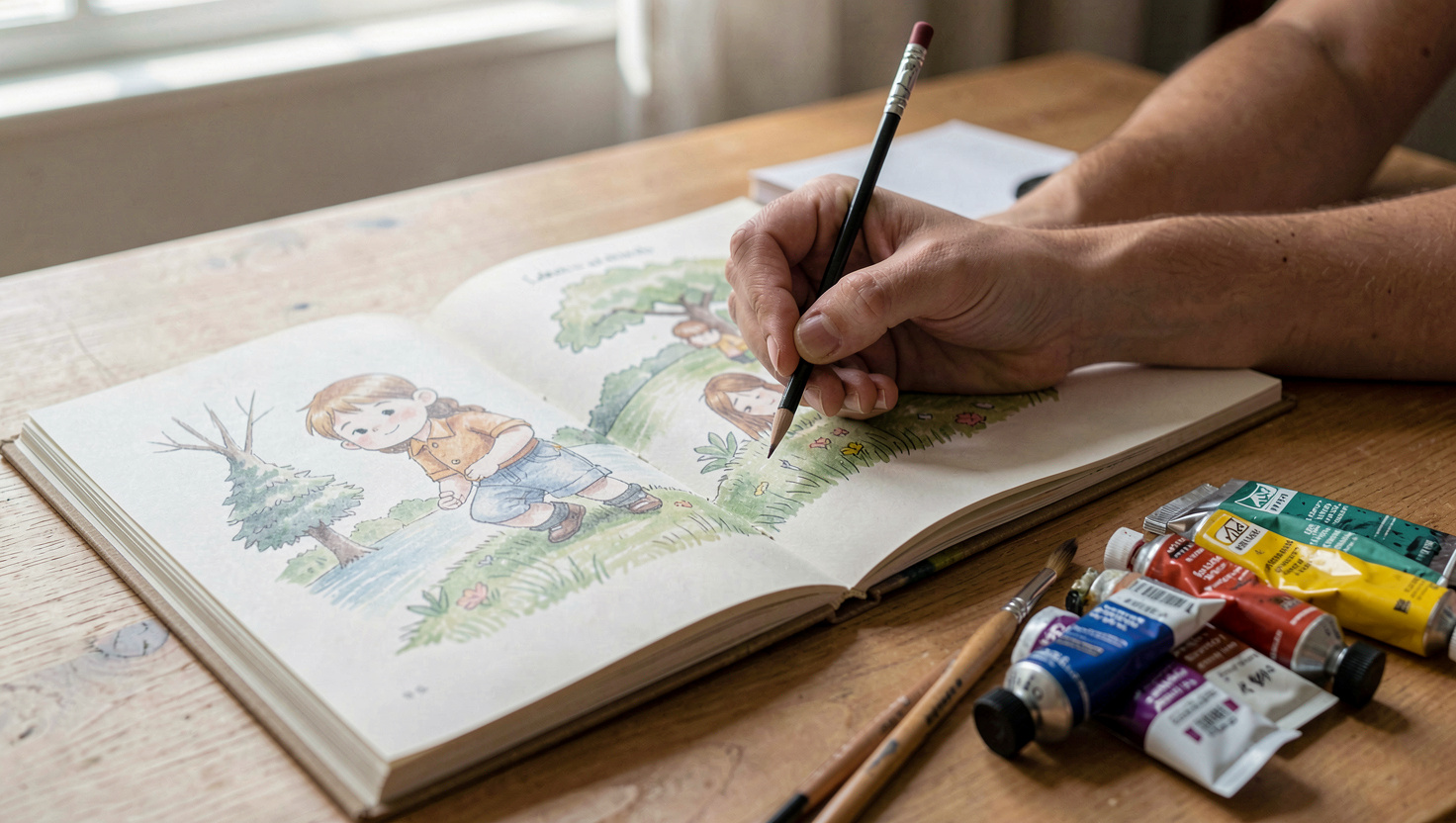
Drawing a wild plant true in a field journal
A wild buckwheat is a plant in the genus Eriogonum, a group of shrubs, mats and perennials native to western North America, and it is not the same plant as the buckwheat grain we eat, which is Fagopyrum esculentum,...
-
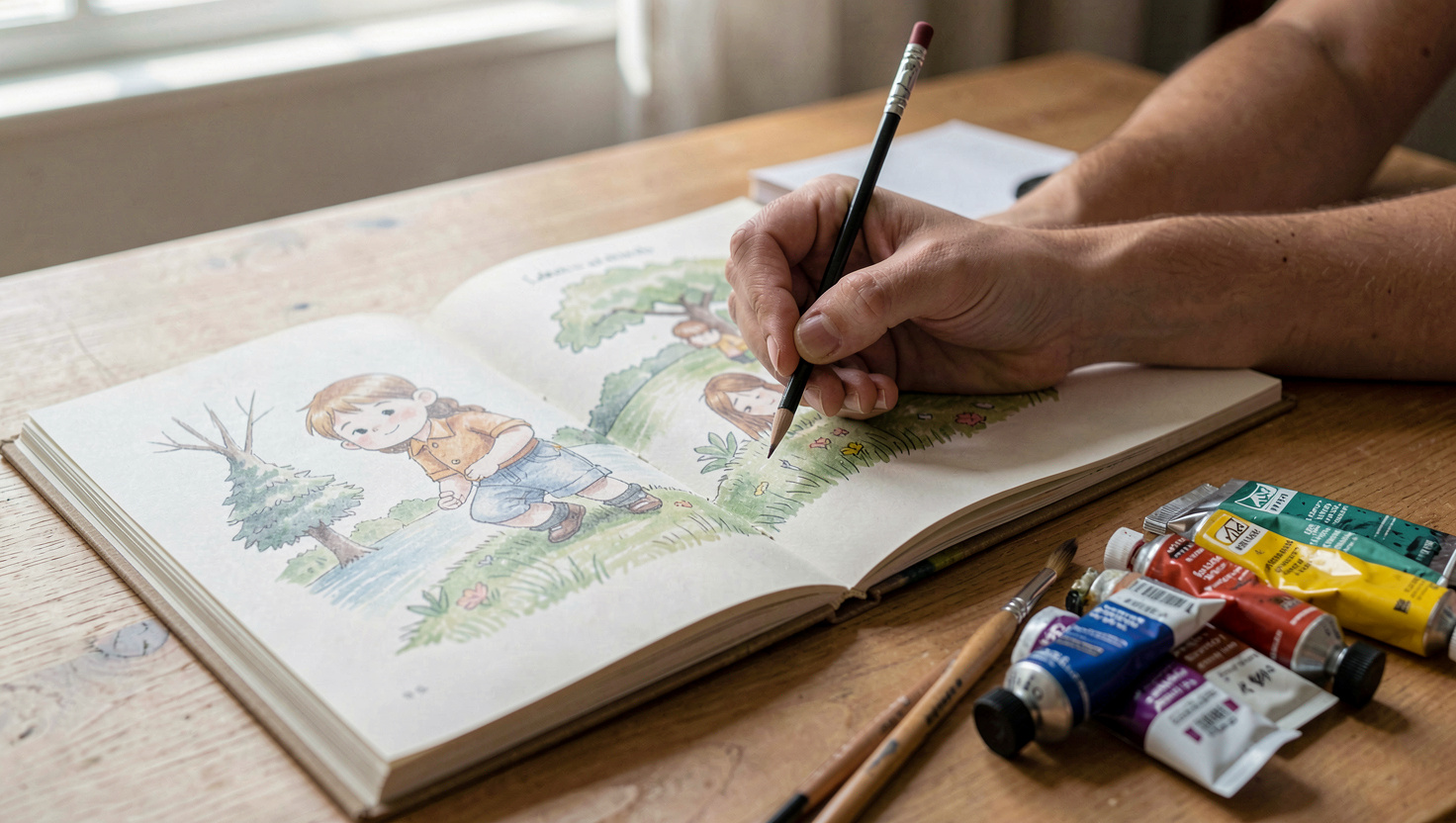
Transit posters as a picture book sequence
A transit poster campaign is a picture book read one panel at a time.
-
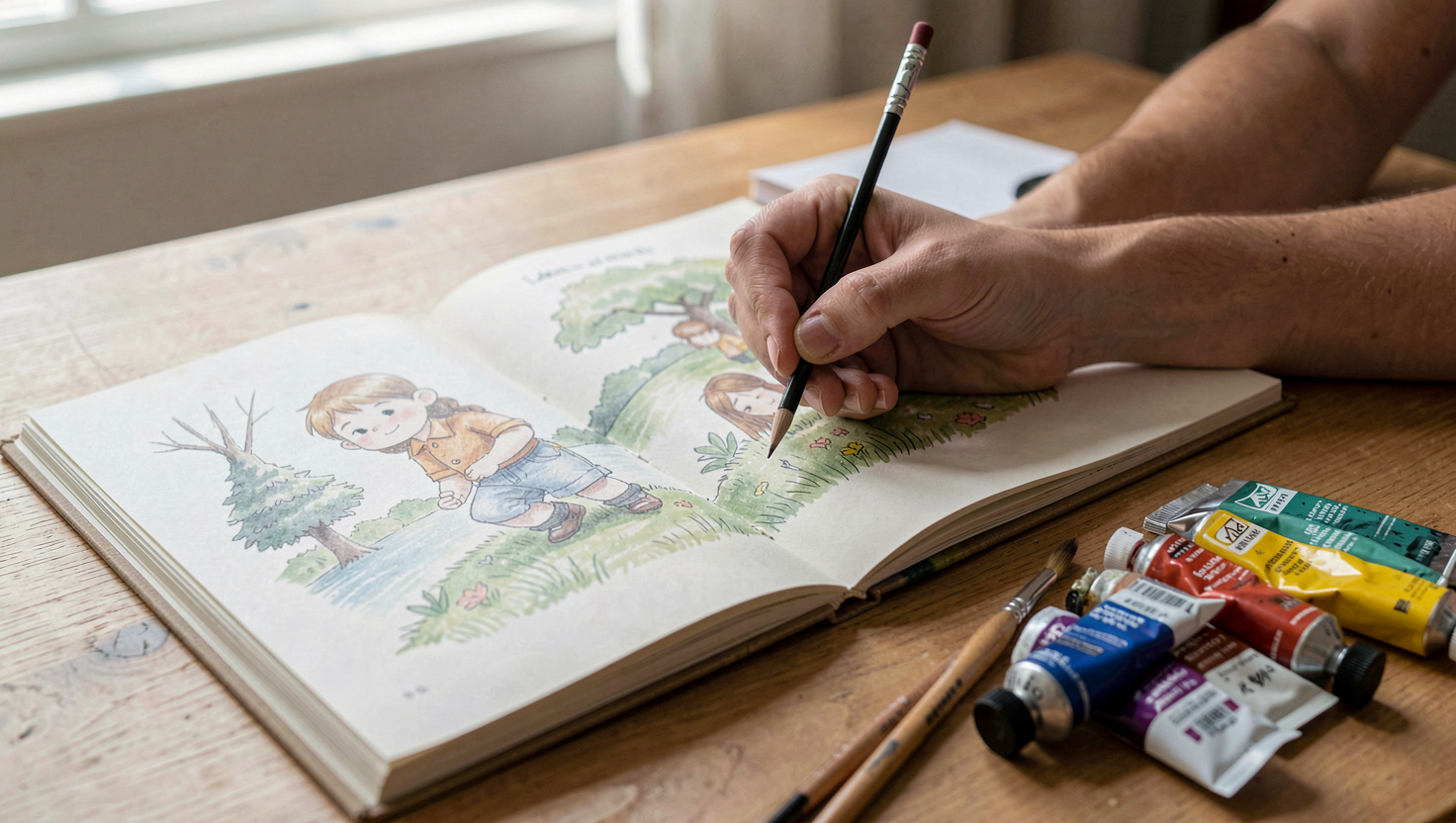
Satellite imagery for landscape illustration
For a children's nonfiction spread, choose satellite imagery by matching ground sample distance to the smallest feature you intend to draw, then check revisit and licensing before you commit.
-
Hand Lettering in Picture Books: What Young Readers See
A child who is still learning to form letters reads a picture book page the way a beginning driver reads a road: slowly, deliberately, and with most attention on the surface.
-
Drawing a working dog on a picture book spread
A working border collie on a picture book spread reads as three decisions: a crouch that lowers the whole body toward the ground, a gap of roughly ten to twenty feet between dog and sheep, and an eye that stays...
-
Board books for babies: format, choice, drawing
A board book is a book built for the hand, not for the shelf.
-
Drawing the kilt right: researching Highland dress
The Carolinas host one of the largest Highland gatherings in America, so a picture book kilt drawn from guesswork will be caught by the first family that owns one. Here is the documentation that prevents it.
-
Drawing denim: the workwear a farm kid wears
Denim is the default costume of the American picture book, and most illustrators draw it from memory. A fabric spec sheet corrects the memory: twill direction, weight, fade and stitch.
-
Building a reference shelf: buying used picture books
Studying picture books means owning them, and the used market is where a working shelf gets affordable. Here is how to read a booksellers description before you pay for the copy.
-

What a Japanese bookshop teaches about format
A Japanese bookshop sells the same novel as a hardcover, a pocket bunko and a cheap shinsho, each with fixed dimensions a century of paper standards settled. The lesson for a picture book maker is trim size as a decision.
-
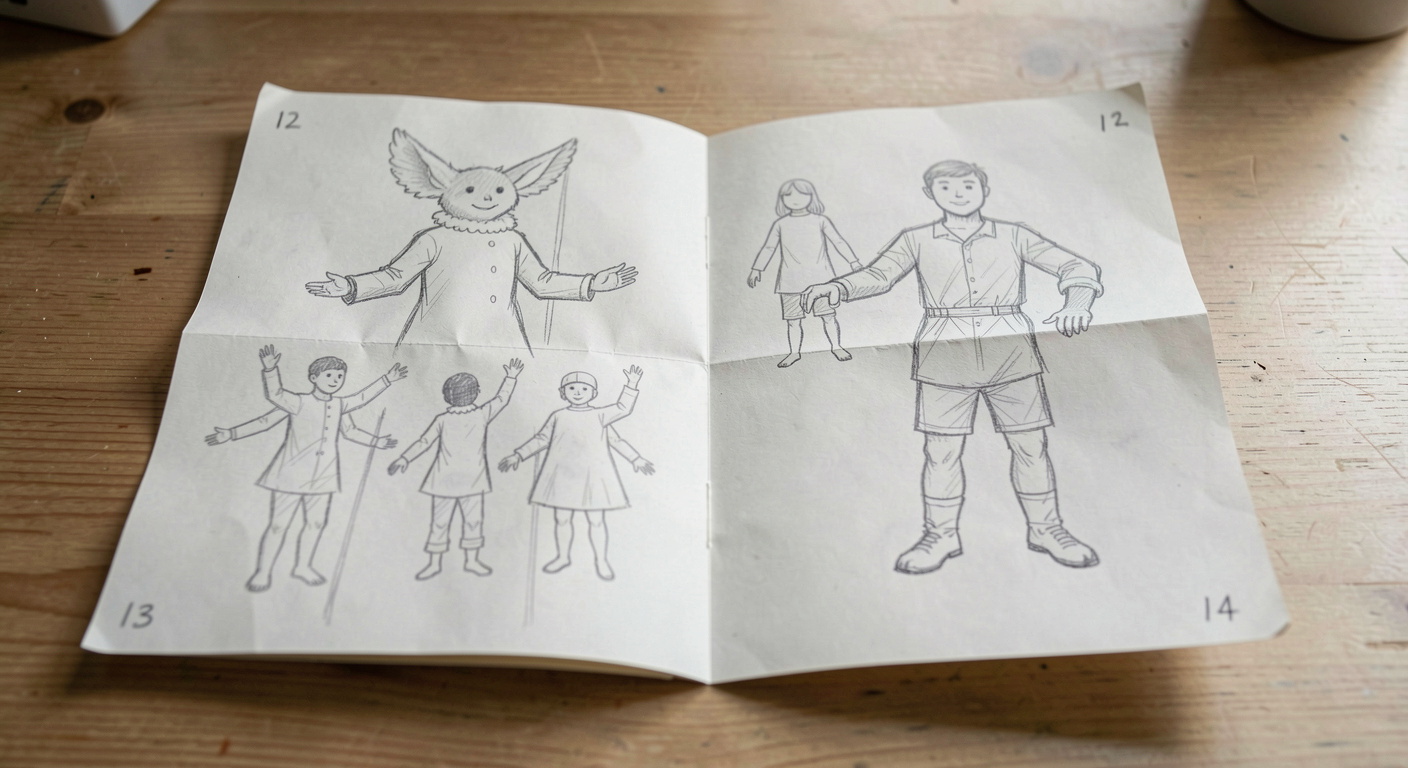
What a picture book dummy is, and who makes one
If you both write and illustrate, a dummy can carry your whole book to an agent: here is what goes into one, who should make it, and what it says when your package lands on a desk.
-
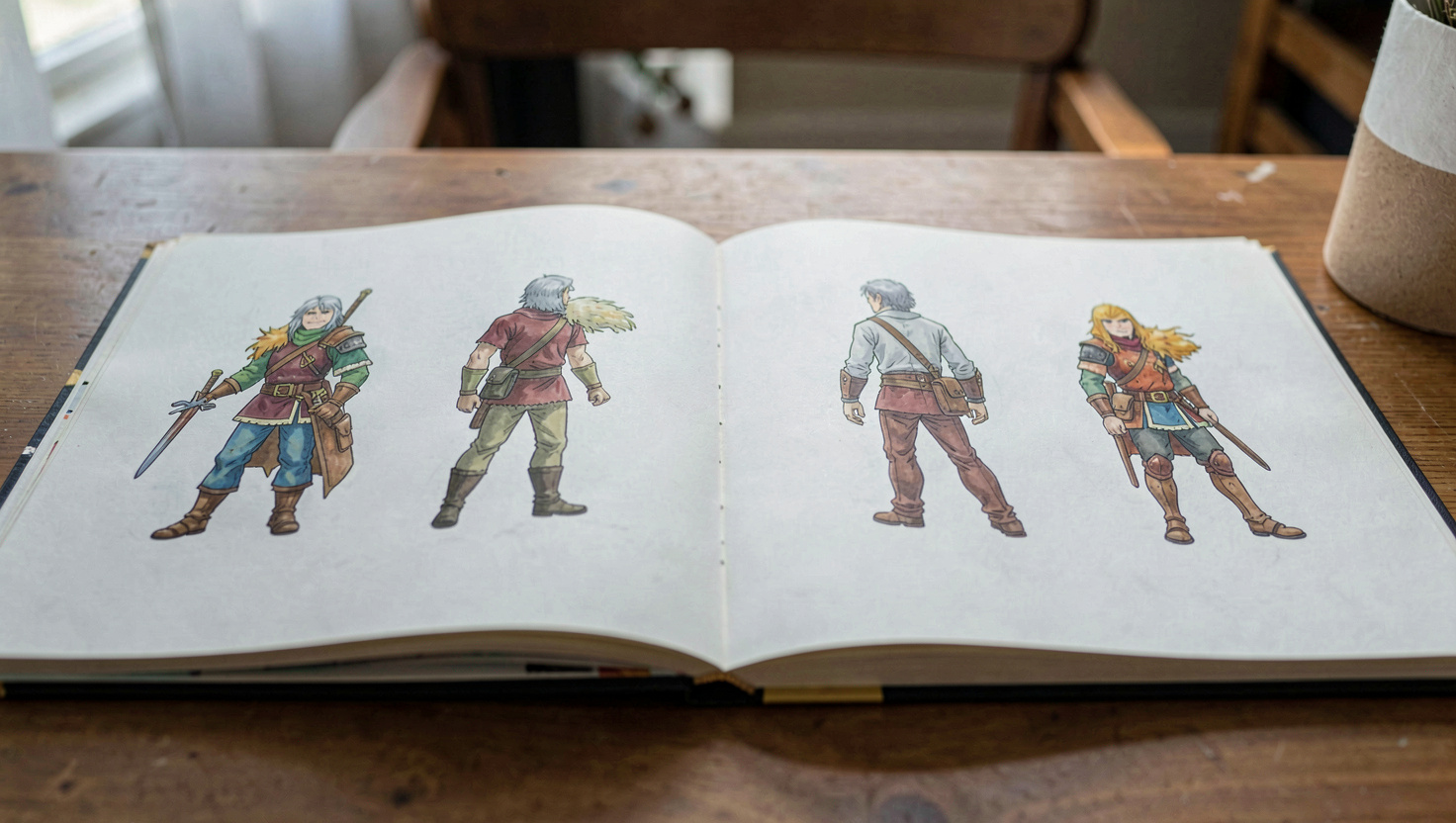
Building an illustration portfolio for childrens books
Six to eight finished pieces, a live link instead of attachments, and clear range in subject, tone and palette: what an online children's illustration portfolio needs before you query.
-
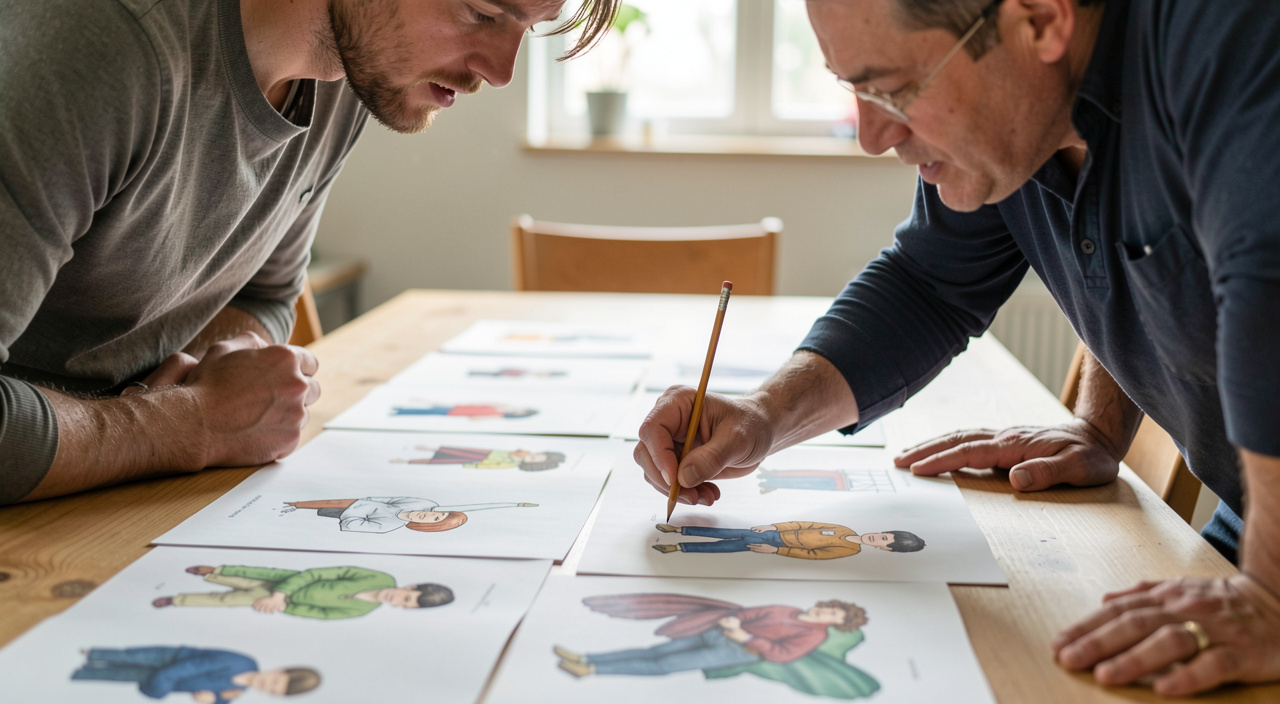
How to take a portfolio review without wasting it
Twenty minutes with a reviewer can tell you where your portfolio shows range, finish, and emotional storytelling, and where the gaps still are, if you prepare before you sit down.
Every guide in this suite reads against the Critique Groups arithmetic, and two neighbouring suites extend it: Craft & Revision and Getting Published.