Illustration
Drawing denim: the workwear a farm kid wears
Denim is the default costume of the American picture book, and most illustrators draw it from memory. A fabric spec sheet corrects the memory: twill direction, weight, fade and stitch.
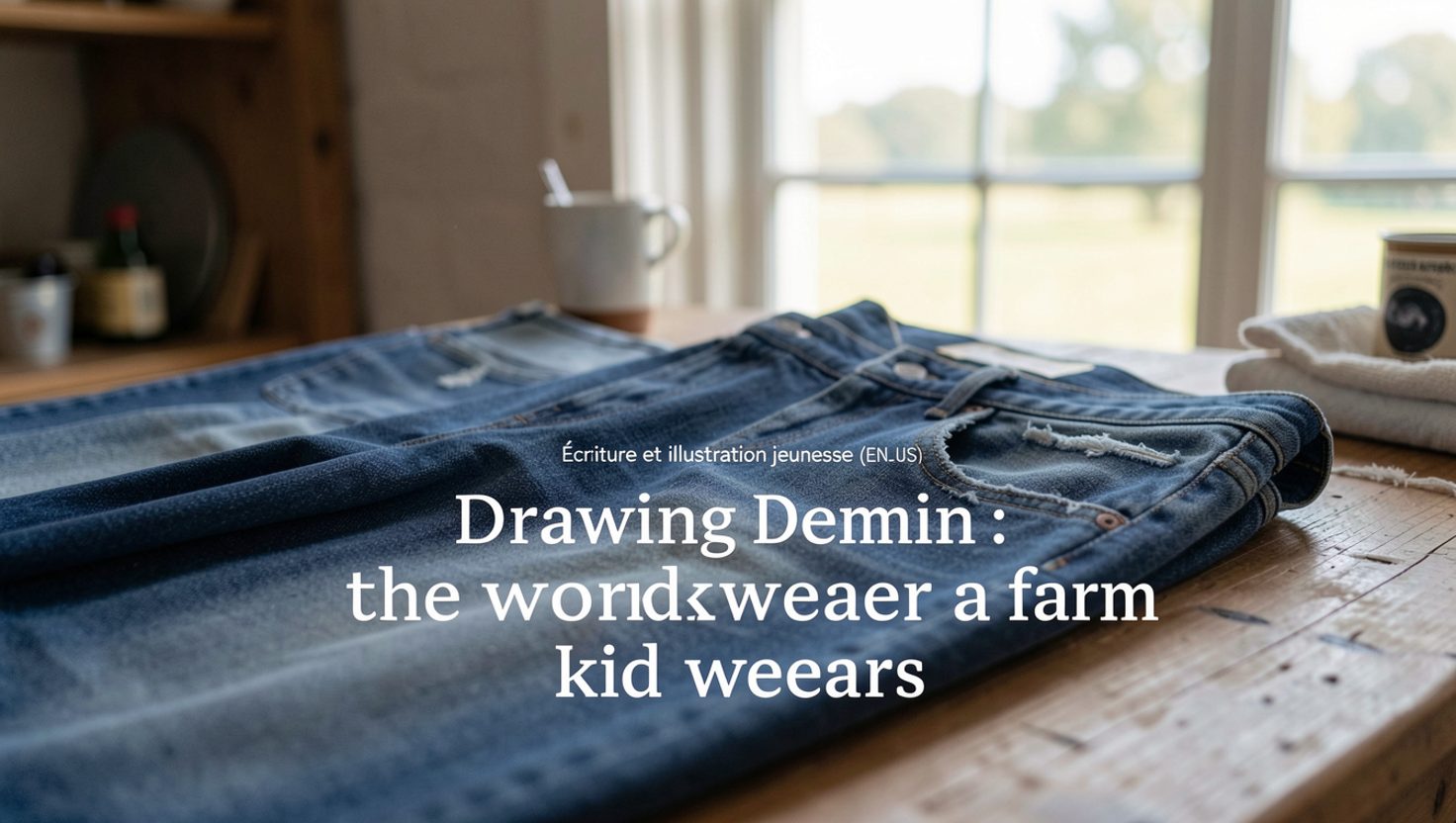
Denim is the default costume of the American picture book. The farm kid, the garage kid, the kid with the dog all wear it, and most illustrators draw it from memory, which is why so many painted jeans have no seams. A technical guide that specifies denim for the clothing trade, Denim Field Notes, reads the fabric the way a buyer does: construction, dye, weight and finish. An illustrator can borrow the checklist.
The payoff is not pedantry. A pair of overalls drawn with real construction sits differently on the body, wears differently at the knee and reads instantly as the thing a working child wears rather than blue trousers.
What a spec sheet teaches the eye
The Denim Field Notes specification reads like a list of things to draw. Ring-spun or open-end yarn decides the surface texture. The twill weave has a direction, and the diagonal line of the twill is the single most drawn-and-most-missed feature of the fabric. Weight in ounces per square yard decides whether the garment stands away from the body or collapses against it.
Learn three facts and the drawing changes: the twill runs diagonally, the cloth is warp-faced so the inside is paler than the outside, and the seams are double-stitched in a contrasting thread. Those three details are the visual signature of jeans, and they cost the illustrator almost nothing once they are seen.
Indigo, fade and the honest wear map
Denim is dyed only on the warp, which is why it fades where it is stressed and keeps its colour where it is protected. The fade map of a working garment is legible: knees and seat pale, the front of the thighs pale, the hem dark, the shadow of a wallet or a pocketknife preserved in the back pocket. Drawing that map correctly is how an illustrator makes a garment look worn rather than dirty.
The finishes matter less for a picture book than the wear does, but the vocabulary is worth knowing: raw denim is the unwashed state, rinsed is one wash, stonewash and enzyme are the factory-aged versions. A book set in a working landscape calls for the first two; the factory-aged look belongs to a different decade and a different wardrobe.
| Detail | What the spec calls it | What it does in a drawing |
|---|---|---|
| Diagonal line | Twill direction | Reads as denim at any size |
| Pale inside | Warp-faced indigo | Cuffs and tears show contrast |
| Contrast stitching | Double-needle seams | The seam is the signature |
| Fade at knee | Abrasion on the warp | The garment looks worked |
Where to look before you draw
The reference is everywhere once the eye knows what to look for. A farm supply shop in any Carolina town stocks the real garment; a museum of rural life shows it aged; a trade guide like the field notes shows the cloth at the fibre level. The three views agree, which is the point: denim is a documented object, and the document is short.
Reading the garment's construction points
The spec sheet's inspection sections are a list of the places denim wears and fails, and each one is a drawing detail. The crotch seam takes the most stress and fades first; the back pockets carry the shadow of whatever was kept in them; the hem shows the original dark where the cuff protected it. A garment drawn with these marks in the right places reads as a garment with a history, which is what the farm kid's overalls are.
The trade's four-point inspection for faults, the standard way a buyer checks a roll of fabric, is also a way of saying that quality is visible if you know where to look. The illustrator's version is simpler: look at the seams, look at the wear, look at the hem. Three glances, and the drawing stops being a guess.
For the illustrator building a costume reference shelf, the same approach works on any working garment. Our piece on drawing Highland dress correctly takes the identical checklist to a more ceremonial outfit, and the shelf itself is covered in buying used picture books for study.
The habit generalises past denim. Every working garment in a picture book has the same structure: a fabric with rules, a construction with seams, a wear pattern with a logic. The illustrator who has learned to read one spec sheet can read the next one faster, and the wardrobe of a book drawn this way has a coherence the guessed version never quite reaches.
The same reading applies to the book's other textiles: the plaid shirt, the canvas jacket, the feed-sack dress. Each has a weave, a weight and a wear pattern, and the illustrator who has learned to see one has learned to see them all. The wardrobe of a working landscape is a document, and the document is legible to anyone who knows where to look.
About the source
Heddels is an independent publication about durable goods and heritage clothing, and its long-running guides to denim construction, weights and fades are written for buyers who handle the fabric. It was the reference for the warp-faced dye and twill details above.