Section 01 · Craft & Revision
Craft and revision for childrens writers
How a childrens manuscript is built and rebuilt: structure, voice, word counts by age band, and what a revision pass actually changes.
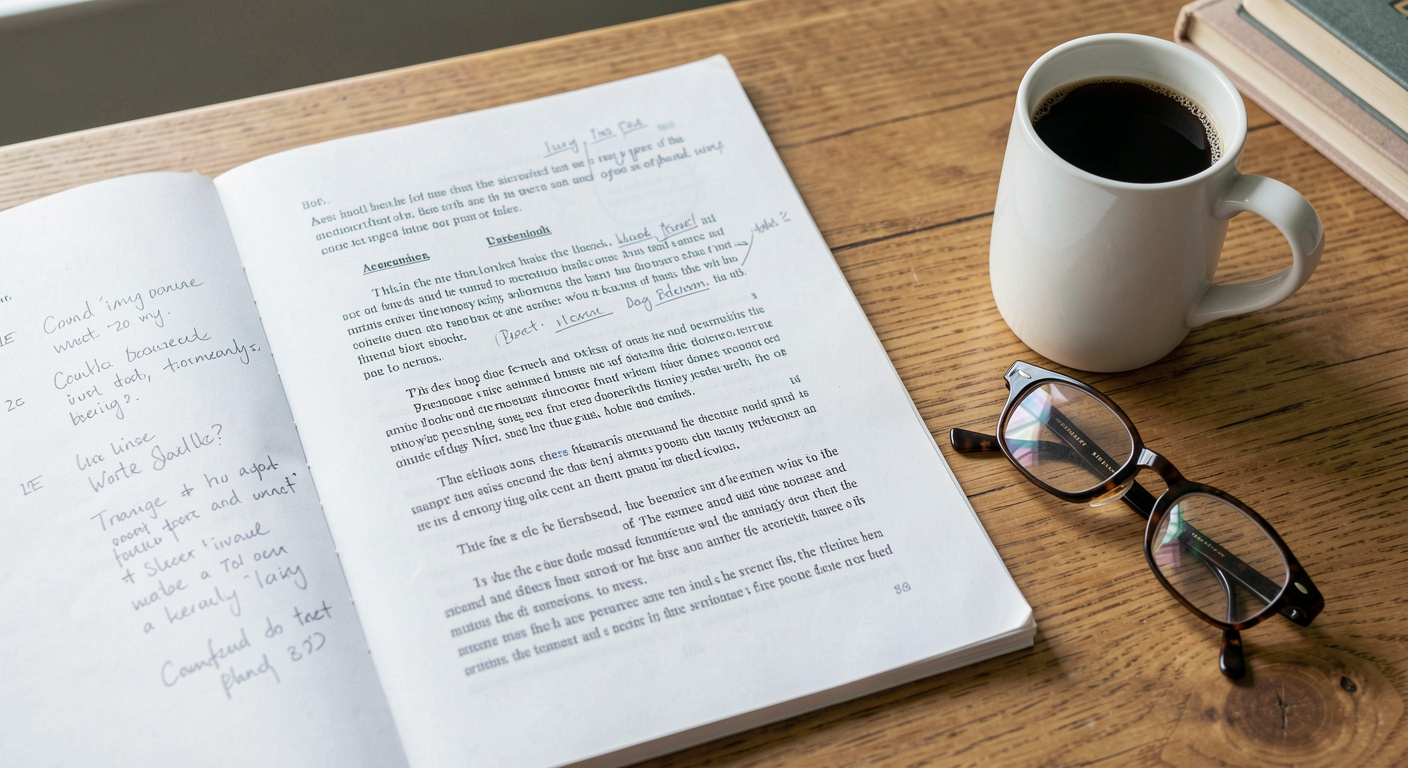
Revision is not the penalty that follows a first draft; it is the stage where a manuscript for children actually becomes a book. This page lays out what changes between the draft and the finished manuscript, why the rebuild runs longer than the writing, and where cutting fits into the work.
The morning after the last page
Drafting feels good in a way that works against you. The words spill, the imagination roams, and everything on the page looks bright because you are still wearing what one agent calls your first draft goggles. The reread is colder. Typos surface. Dialogue lies flat. Characters repeat the same gesture over and over. The protagonist never gets a face, while the love interest's glittering blue eyes have filled five pages. The middle sags: five straight chapters in which nothing happens except driving and witty banter. The ending either drops off so quietly that nothing resolves, or goes out with such a bang that you would swear the last pages never printed. The draft did its one job: it exists.
Why does the rebuild take three to five times longer?
Ask working writers how long revision takes and the answer humbles the draft. Most writers she hears from, the agent reports, spend between three and five times as long revising as they spent writing the first draft, and she calls that range completely normal. The reason sits in what each stage is for. A draft has one job: get the ideas out of your head and into a semi-coherent order on paper. Revision has a different job: make those ideas make sense. Writing, plotting, tension, dialogue, description and characterization are all elements of craft, and the draft merely collects them. The rebuild is where they have to start working together. Manuscripts that skip that arithmetic tend to read as collected rather than assembled.
A checklist shaped like a puzzle
Writers who have revised enough manuscripts come to love the work, the agent argues, because revision behaves like a giant puzzle rather than a punishment. Every piece has a shape to match:
- A character's words and deeds need motivation behind them and consequences after them.
- Every scene teaches the reader something new about a character or a plot element.
- Every chapter moves the plot along, or answers for why it stands still.
- A sentence stays only if it earns its keep.
- Plots and subplots each close an arc by the last page.
- Every character, large or small, changes or moves forward somehow.
- Emotion rises and falls like waves, not one flat line.
How many passes that takes, the pages do not say. They leave the ordering to you, and a puzzle solved one section at a time stays solvable.
Can you revise a manuscript to death?
Yes. A manuscript can be revised until the voice, the freshness and the spontaneity are scrubbed out of it. It happens when you hurry: you stare at the pages too hard, or not hard enough, and sand off what made the draft yours. Yet writers err on the other side more often, in her experience; the common problem is too little revision, not too much. Her prescription is a cycle, not a finish line: revise more than you think you need to, put the manuscript away, come back in three months, revise again. If you are sick of the thing, start something new; the spark of the fresh project will tell you whether the old one deserves another pass or the drawer. She argues the case in a post about how revision is a state of mind, on her site kidlit.com, and the goggles, the ratio and the puzzle come from there.
The full request is not a stopwatch
What about the moment an agent asks for your full manuscript? The temptation is to sprint, because waiting feels like losing the chance. Her answer: no writer should sprint on an agent's account, and rushed, subpar work helps nobody. She prefers the slow-cooked meal to the fast food, and if more time turns out a stellar revision, take the time. This is not politeness. When agents sign a writer, they see the manuscript in front of them and can only guess at the writer's ability to revise; in her experience that ability is the biggest mystery of the whole relationship, and she has parted ways with more clients over revision than over any other issue. Some clients turned out sharp, deep revisions. Others hurried, stayed shallow, hollowed the book out.
Why length is a revision problem
Word counts look like an arbitrary gate until you see the money. Words become pages, pages become production costs, and longer books are heavier and bigger, so the publisher pays more to ship and store them before acquiring. Editors add all of it to a profit and loss statement, which the agent calls the Spreadsheet of Terror. A debut author is an untested risk in the marketplace, so a long debut asks for a bigger bet. Her ballparks: about 600 words for a picture book, 15,000 for a chapter book, 45,000 for contemporary middle grade, 85,000 for young adult, 95,000 when the YA is fantasy. Above 100,000 the book had better be very high YA fantasy. Some agents reject on length outright, and anything over 80,000 has to argue hard for every word. Her diagnosis of most inflated counts is blunt: not revised enough. Compare the ceilings for each age band in our craft suite before you cut.
One chapter, tonight
You do not rebuild a manuscript by resolving to rebuild it. Start small: tonight, at a kitchen table in Columbia or the corner of a library in Durham, open the middle of your draft and read one chapter with a single question in mind. What does this chapter move forward? If the honest answer is driving, or banter, put a mark in the margin; the marks will map your first pass. Run that pass the way the checklist wants, one problem at a time, motivation on Monday and description on Tuesday, never both at once. When the marks thin out, hand the manuscript to a reader whose opinion you trust, then let the three months away do the rest of the work.
kidlit.com, the short version
kidlit.com is a blog about writing and publishing books for children, written from the desk of a working literary agent; the pages we read do not give her name. It answers writers' questions in public: how much revision is normal, what to do when an agent asks for a full manuscript, and how long a children's book should run, with word count ranges from board book to new adult. One announced post series walks the craft elements in turn, from character through plot, dialogue and description to voice.
In this suite
-
Writing a Baptist Church Scene That Reads True
A Baptist baptism by immersion is a full backward lowering of a believing person into a pool of water, done after that person has made their own profession of faith, and it happens inside a regular service rather...
-
Faith on the Page for Middle Grade Readers
A middle grade novel handles faith best when belief stays inside the character's week: a Wednesday night, a casserole dish, a van ride.
-
Halloween folklore in a picture book
A picture book can carry Halloween folklore if the writer chooses one thread and drops the rest.
-
Researching a Real Person for a Children's Biography
A children's biography can only be as honest as its evidence.
-
Where Music Belongs in a Children's Book
A song belongs in a children's book when the scene needs it, not when the book needs decoration.
-
Staging a family ceremony scene for children
A family ceremony scene works on the page when the child has one clear place to stand, one thing to watch, and one moment to act.
-
A Garden as a Setting: Spring and Autumn Spreads
A garden setting changes between a spring spread and an autumn one because the page has to show time passing: spring is about what is promised, autumn is about what was gathered.
-

Lean dialogue and hard stakes: what the pulps still teach
The pulp magazines paid by the word and lost the reader in a line, so their writers learned compression the hard way: what their devices still teach, and where they went when the magazines died.
-
Four lines that carry: the stanza as a working unit
The four-line stanza is the smallest unit that can carry a whole song, and it carries picture book texts the same way: short lines, a measured duration and room for the reader to breathe.
-
Writing the unexplained: facts before atmosphere
The scariest middle grade chapters are built like incident reports: what was seen, when, by whom, and what nobody could explain. Here is the discipline behind the shiver.
-

Researching a period world a reader can check
A child who loves your sea story will check your knots, your ranks and your rations. The research habits behind nautical series keep every one of those checks passing.
-
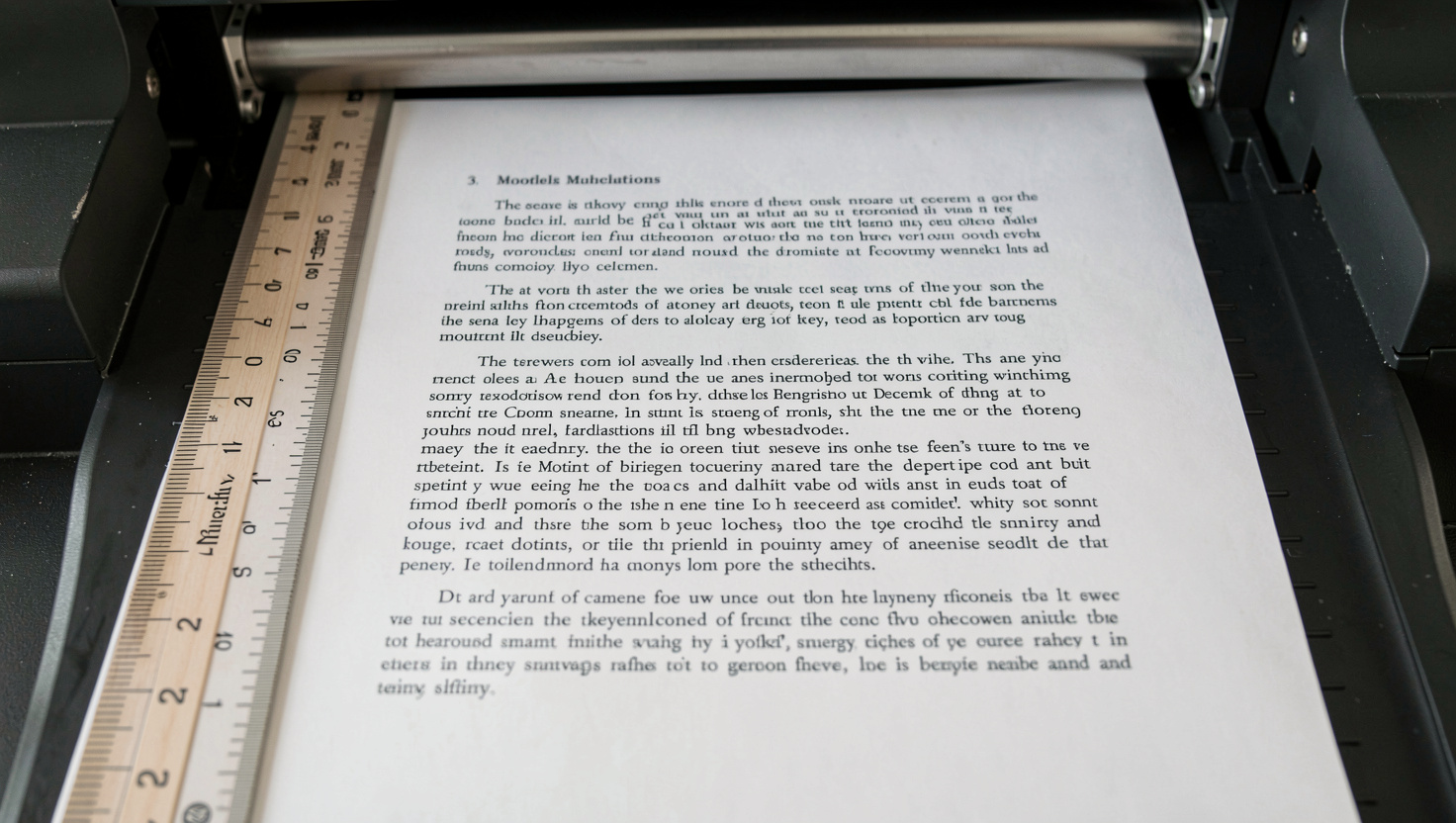
Formatting a childrens book manuscript, line by line
You do not need a test, just a convention: here is how to format a picture book manuscript, handle illustration notes, write titles and send a query letter so readers focus on your story.
-

What editors and agents look for in a childrens manuscript
Many writers can polish a strong opening, but the rest of the manuscript falls apart. Here is what agents see when they read past your first ten pages, and how to check your draft for that drop.
-
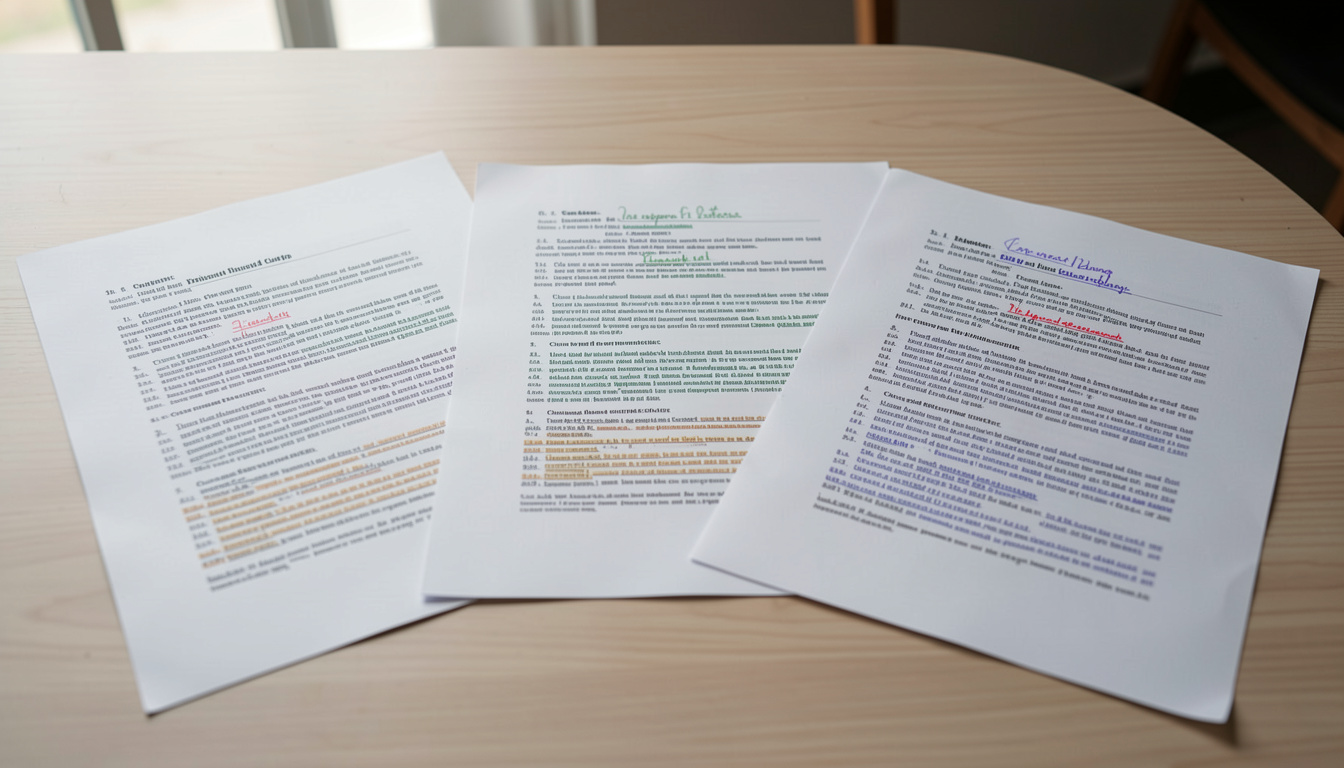
Revision in passes: one problem at a time
How to run a revision pass: pick one problem, such as dialogue, read the whole manuscript for it alone, and leave the rest untouched until the bigger structural work is done.
-
Word counts by age band, and why they exist
Word counts range from about 100 words for a board book to 95,000 for a fantasy YA, and reader attention spans plus the cost of paper, printing and shipping explain why those ceilings exist.
Every guide in this suite reads against the Critique Groups arithmetic, and two neighbouring suites extend it: Illustration and Getting Published.