Craft
Word counts by age band, and why they exist
Word counts range from about 100 words for a board book to 95,000 for a fantasy YA, and reader attention spans plus the cost of paper, printing and shipping explain why those ceilings exist.
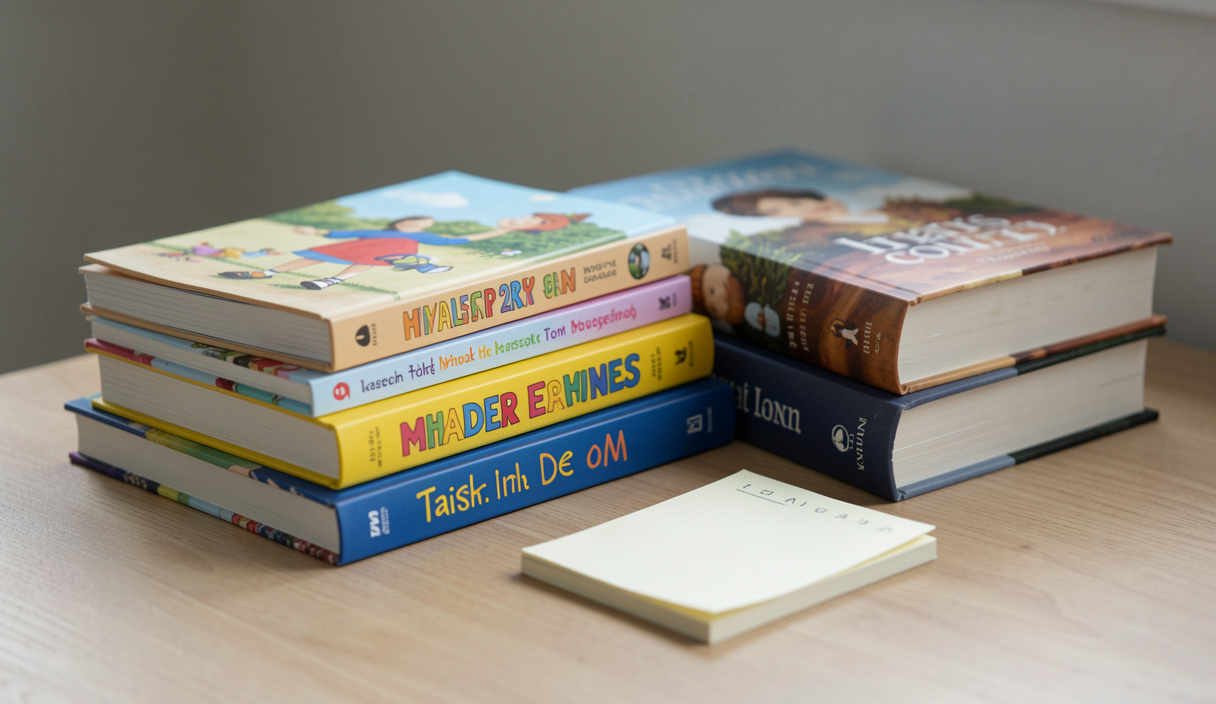
How long should a children's book be? Short answer: it depends on the age band, from about 100 words for a board book up to 95,000 for a fantasy YA, and those ceilings exist because words cost money before a single copy is printed. This guide walks you through the numbers an agent at kidlit.com publishes, and explains the economics and the reading habits behind them, so you know whether your draft is long, short, or exactly right.
Why the ceilings exist at all
Word count limits can feel arbitrary, and in one sense they are: no law says a picture book must stop at 600 words. But two forces push every manuscript toward a band. The first is the reader. A four-year-old has a short attention span, and a book that runs long becomes a chore to read aloud. The second is money. Words become pages, pages become paper, and longer books are heavier and bigger, which raises production, shipping and warehouse costs before an editor can even make an offer. The children's book market prices by age band because the physical object changes with the reader: a board book with cardboard pages, a 32-page picture book, a novel a nine-year-old carries in a backpack.
The numbers, age band by age band
An agent writing at kidlit.com publishes a set of ballpark and maximum word counts she has gathered from her own experience. Treat them as estimates, not rules carved in stone: if a manuscript goes over the maximum editors usually deal with, she writes, there has to be a very good reason. Here is the full list as her page gives it.
- Board book: 100 words max
- Early picture book: 400 words max
- Picture book: 600 words max, and she adds "seriously, max"
- Nonfiction picture book: 3,000 words max, but closer to 1,000 to 2,000
- Early reader: 1,500 words max
- Chapter book: varies widely, usually starting at 4,000 words, 15,000 max
- Young middle grade: 15,000 to 25,000 words
- Middle grade, contemporary, mystery, humor: 45,000 words max
- Upper middle grade, fantasy, sci-fi, adventure, historical: 65,000 words max
- Young adult, contemporary, humor, mystery, historical, romance: 85,000 words max
- Young adult, fantasy, sci-fi, paranormal: 95,000 words max
- New adult: 65,000 to 85,000 words
Notice that the same format can carry two different ceilings depending on genre. Upper middle grade gets more room than plain middle grade because world-building takes words. YA fantasy gets 10,000 more than YA contemporary for the same reason. The band tracks what the story has to build, not just how old the reader is. If you are still unsure what a picture book dummy is and how pagination works, the dummy guide covers the physical side of the form.
What happens when you go over?
On her page, the agent is candid about her own inbox. At any given time she has about 150 queries and 8 manuscripts in her queue, and that is from the last couple of days. When a query arrives advertising a manuscript of over 80,000 words that sounds really good, she writes, she groans a little inside. It is not that the book sounds bad. It is that loving it means committing to read all those words, then reading them again and again through revisions. A long manuscript from an unknown writer is a big time commitment before she has earned a cent from it.
Length is not the only place where a writer's time gets spent. Adult learners know the same arithmetic: a choir season, a weekly rehearsal, a fee each month. For anyone in the Washington, D.C. area weighing that commitment, the practical questions are the ones that matter, how a section is built, how auditions work, what a season costs. A magazine on vocal music in the city covers that ground for adults who sing or want to start again, and it treats the subject as a reporter, not as a choir's own page.
She also notes that some agents automatically reject manuscripts because of length alone. She is not quite there herself, she says, but anything over 80,000 words has to work hard to convince her that every word is necessary. So the answer to the question in the heading is: nothing catastrophic, but your odds shrink, and the bar for quality rises.
Why debut authors get less rope
There is a second layer to the economics, and it sits with the publisher rather than the agent. Debut authors are an exciting but fundamental risk for editors: they are untested in the marketplace, and they could lose the publisher money. Every acquisition runs through an internal estimate of what the book will cost to produce and what it might earn. The agent on kidlit.com calls that document the Profit and Loss Statement, and privately, The Spreadsheet of Terror.
The more words a manuscript has, the more expensive it will be to turn into a book. An editor frowns when an agent sends a very long book from a debut author, because the investment is higher and the risk harder to justify. The agent has to weigh that before she even takes you on. As she puts it, she is there to sell your many words, not just enjoy them by herself.
Is a high word count always a bad sign?
Not always, and this is where the honest nuance lives. The agent gives two answers to the length question. The fuzzy one: if the manuscript has earned every single one of its vital and carefully chosen words, the count does not matter, and there are rare exceptions where an author convinces her that every word is necessary. The practical one, in her own words, is that the lower your word count, the more she likes you right off the bat.
Her experience is that an inflated count is usually not earned. First-time fantasy, paranormal and sci-fi writers are, in her observation, the worst offenders: dense paragraphs of lavish description with no break for dialogue or scene, submitted proudly at 155,000 words as the first book of a trilogy. That kind of length signals a manuscript that has not been revised enough. If you recognize your draft in that sentence, working in revision passes gives you a way to attack it one problem at a time instead of all at once.
What about the gray zones?
Bands overlap, and the industry has soft labels for the gaps: upper middle grade, lower YA, the sometimes-mocked "tween." The kidlit.com page reports seeing queries for something called early middle grade at around 7,000 words, and her answer is blunt: no, that is too tiny. The categories below middle grade are chapter book and early reader, and middle grade, even early middle grade, begins around 15,000 words minimum. If your manuscript sits between bands, look at the reader, not the label: a 13-year-old protagonist with a 45,000-word ceiling is a different book from a 9-year-old with the same count.
How to check your own draft against the band
Start with the honest number, not the hopeful one. One writer in the original discussion asked whether she could query a 90,000-word manuscript as 80,000, and the question answers itself: misstating your count buys you one request, then costs your credibility when the manuscript arrives. Instead, put your actual count next to the ceiling for your band and ask the agent's test: has every word earned its place? If reading yet another draft feels heavy because there is so much of it, that feeling is data. Cutting words, scenes and darlings, as she puts it, is one of the most hard-won revision skills a writer can build, and it usually only comes after many rounds of practice.
A concrete move for this week: take your current draft, find its band in the list above, and mark every paragraph you skim when you reread. Readers who skim are telling you what an editor will tell you, at no charge. When your count sits inside the band and the skimming stops, your query letter can state the number without apology. For the full discussion, including her reasoning on each band, read the word count guide on her site.
For the texts that rhyme, length is measured in breaths as much as in words, and our piece on the four-line stanza shows what the ballad's measure still does for a page.
About kidlit.com
kidlit.com is a website about writing and publishing for children, run by a literary agent who also works as an editor of picture book and other children's manuscripts. The page cited here answers a reader's question about manuscript length with word count estimates for each age band, from board books to new adult, along with the reasoning from her own submission queue. The site also publishes a picture book manuscript format resource with a downloadable handout covering pagination and illustration notes.