Illustration
What a picture book dummy is, and who makes one
If you both write and illustrate, a dummy can carry your whole book to an agent: here is what goes into one, who should make it, and what it says when your package lands on a desk.
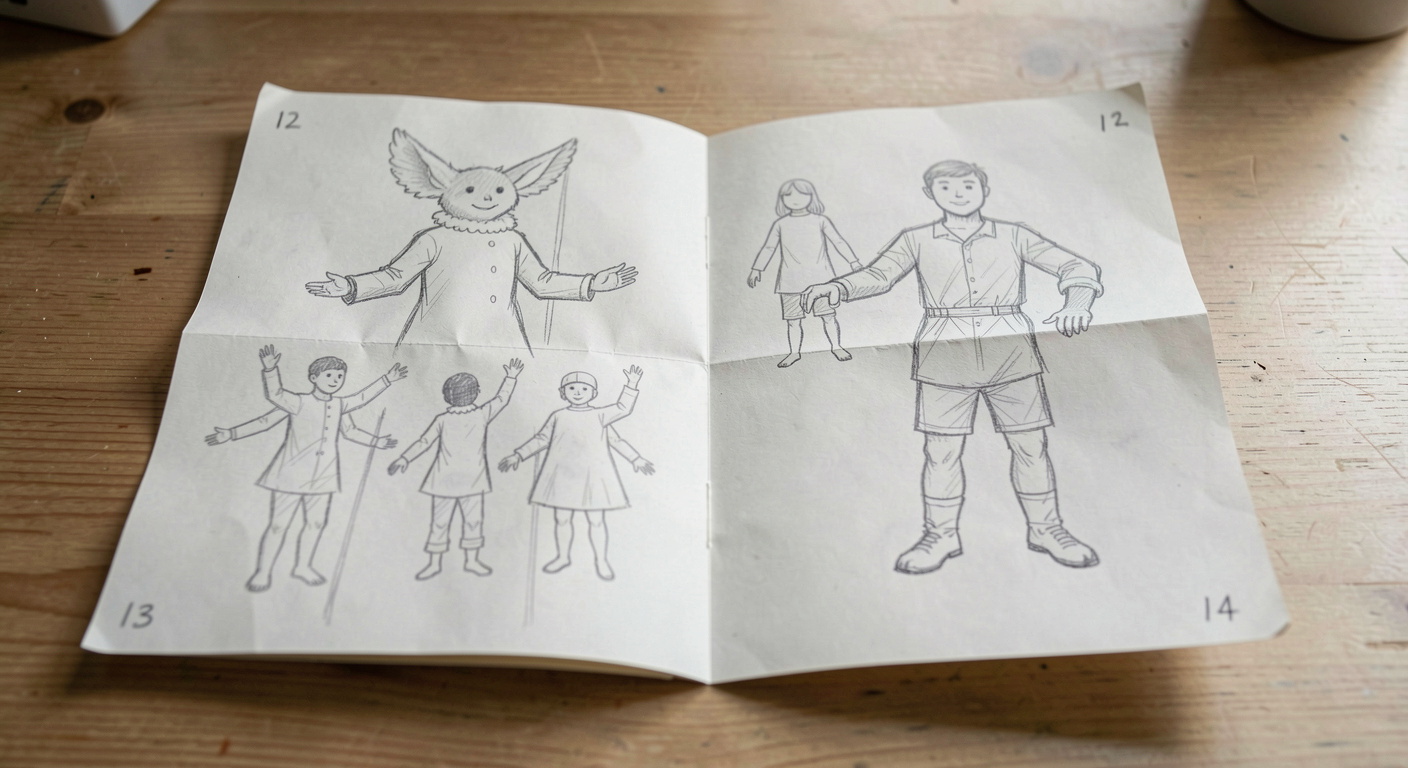
A dummy is a picture book built like a book: rough sketches carrying the whole story, a few pages finished in full color, and the manuscript text riding along. It exists because some creators make the words and the pictures both, and this guide covers what goes into one, who builds it, and what it changes when the package reaches an agent.
What the word covers
Writing at Kidlit.com, a literary agent describes the package that goes out for an author-illustrator client: a full sketch dummy, anywhere from two to five mock finishes, which are full color renderings of chosen sketches, and the manuscript text. The whole thing travels by mail, since some art reads better spread out on a desk, or as a digital PDF when a screen serves it just as well. Two numbers sit inside that description, and almost nothing else about the object is fixed. The article does not give a page count for a dummy, or a standard for how finished the sketches need to look. What is constant is the claim the object makes when it lands: here is the book, whole, in one pair of hands.
Who makes a dummy?
The short answer is one person. When the text and the art of a project come from a single creator, that person is called an author-illustrator, and the dummy is that creator's natural submission. The agent is blunt about the order of training: most author-illustrator clients at the agency were trained illustrators first and writers second, because storytelling and structure can be reshaped through editorial work while the art itself has to be mastered before anyone signs. Writers who do not draw are not shut out. Text-only sales are still made every day, and the question of how to find an illustrator gets its own full answer from the same agent. Hiring one, though, makes you the publisher: you find the artist, set the specs, art direct and give feedback, then submit as a team, which changes everything that follows.
The route that skips the dummy
For a writer, the pipeline laid out at Kidlit.com has five moves: get representation for the text or an offer from a publisher, sell the text, let the publisher match it to an illustrator, see the art with varying levels of input, publish. For an illustrator the road runs differently: representation or publisher interest first, then waiting until a publisher has the right project, then a contract with sketches, finishes and revisions. One belief is worth correcting on the way, because it feeds the urge to bring your own artist along. Publishing houses do not keep in-house illustrators; they hire out. What houses keep in-house are designers and art directors, and designers do not draw the art. They build a book's cover and packaging, except on picture books, where the illustrator usually provides the cover image.
Why an editor opens one with interest
Given that machine, a dummy reads as a shortcut. The editors this agent talks to like author-illustrator projects because the whole package is visible at once: the text, the art, the interplay of word and image, the design of the thing. A bought author-illustrator project hands the editor a snapshot of the finished book right there in the dummy, and means working with one creator instead of two. A loose text and a lone portfolio are both incomplete; in the agent's phrasing, "they need their mate in order to become a book," and the match falls to the right editor and to chance. The same writer reports that agents and editors prefer author-illustrator projects by a wide margin, and calls a fondness for working with them a personal preference rather than a rule.
What if the dummy has two makers?
Then the first rule is plain: state the collaboration outright in the query letter. After that comes the risk, identical at an agency and at a house. One component may be stronger than the other, and your closeness to the co-creator makes that hard to see. A package also tells the reader that this is how the creators want the book produced, so a weak half invites rejection rather than re-imagining; the agent pictures an editor wishing one half were stronger, then passing. The publisher also keeps the final say over who writes and who draws a book, a call shaped by relationships, prestige, and how sales and marketing react to either component. In a market where most titles are not picked up by the major chains, houses often pair a debut author with a name illustrator, or the reverse. A debut text locked to a debut illustrator is, in the agent's words, not the most compelling case.
The portfolio behind the sketches
Before any dummy leaves your desk, an online portfolio has to exist. The guidance is firm on this: it can be simple, and someone else can build it, but you must be able to update it with new images. The contents call for about ten to twenty strong examples that show range: characters, micro scenes that close in on one or two things, macro scenes that hold a wide scope of action in one picture, settings, animals. The portfolio is also what an agent can react to before signing, commenting on composition, image choice, character, expression and color, while the drawing itself has to arrive already mastered. If you are assembling yours from zero, the walkthrough on how to build a portfolio covers the first pieces.
Getting the dummy asked for
On the submission itself, those guidelines accept no attachments with queries. You paste the query and the full picture book text into the message, even when the text depends on the art, you say that you are an author-illustrator, and you include a link to your portfolio. If the art style lands, the dummy gets requested, and the attachment goes then. All of that weight sits on the query letter, which is also where a collaborator gets disclosed. The closing advice from the original piece cuts across every case above: be flexible. If an agent or an editor wants only your text, or only your art, consider it, because that openness can decide whether the book is published at all. So make one move this week: open the manuscript, decide which kind of creator you are on this project, and count your portfolio pieces against the ten to twenty an agent expects to see.
The dummy's physical cousins are covered in two newer pieces: drawing the kilt right on the costume research a Highland spread needs, and Japanese book formats on what a shelf of tankobon, bunko and shinsho teaches about trim size.
Kidlit.com
Kidlit.com is a blog about writing and illustrating for children, written by a literary agent who represents authors and illustrators and answers reader questions at length. The posts behind this guide cover the picture book submission pipeline, finding and hiring an illustrator, and how dummies, portfolios and queries are handled at an agency. Each article is built around one reader's question and the agent's working answer.