Illustration
What a Japanese bookshop teaches about format
A Japanese bookshop sells the same novel as a hardcover, a pocket bunko and a cheap shinsho, each with fixed dimensions a century of paper standards settled. The lesson for a picture book maker is trim size as a decision.
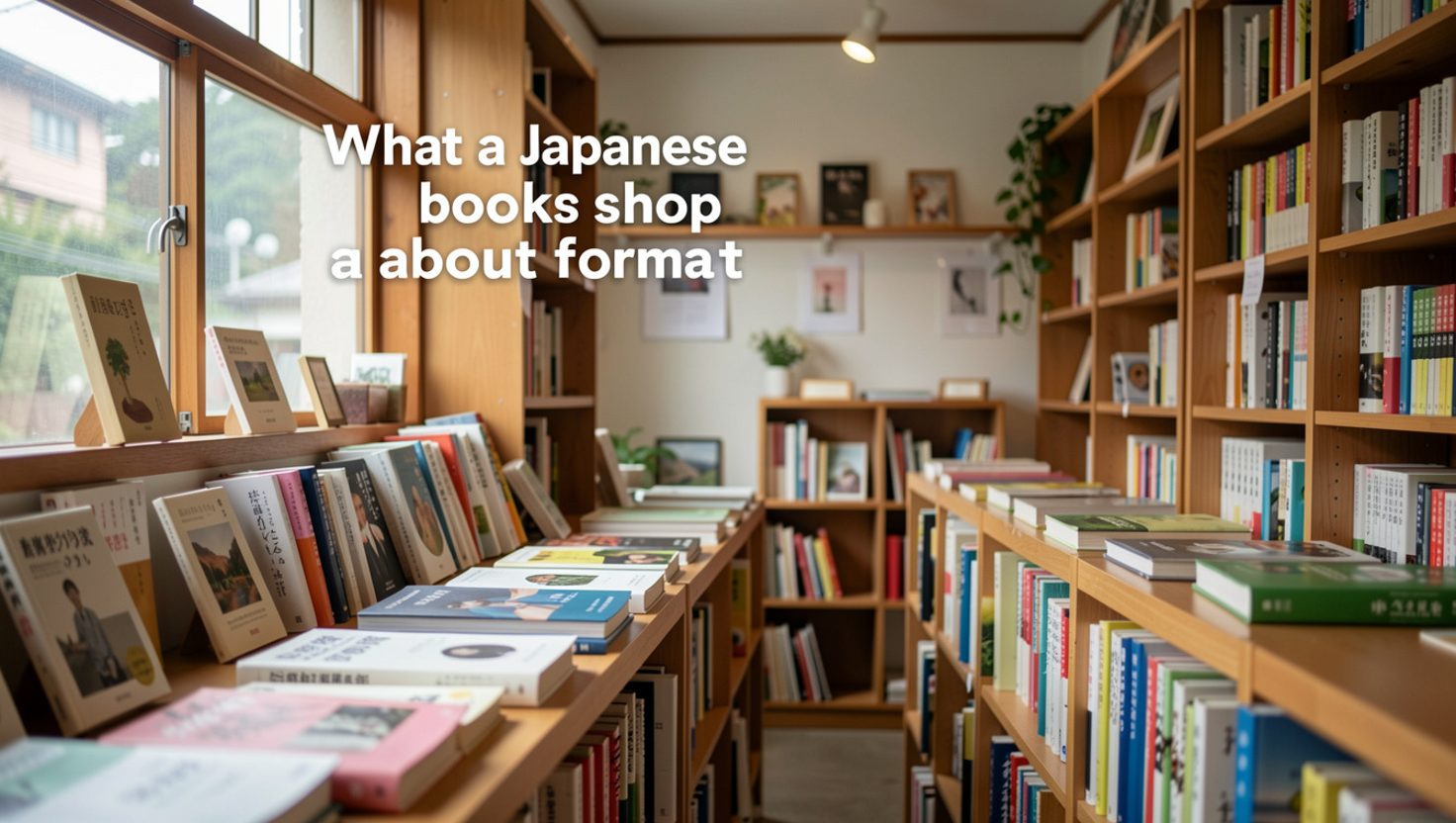
A Japanese bookshop sells the same novel in three physical formats at three prices, and the system is old enough that a reader can name the format and know the dimensions before seeing the book. Akane Books, a Japanese guide to reading as a daily practice, walks the newcomer through the vocabulary: tankobon, bunko, shinsho, the colophon called okugaki and the paper band called the obi. For a maker of picture books it is a demonstration that trim size is a decision, not a default.
The American picture book has its own conventions, the eight-by-ten and the square album, but they feel invisible until you see a market where the format is named, priced and sold as a separate choice.
Tankobon, bunko, shinsho: the same text three ways
The tankobon is the standalone volume, the hardcover or trade paperback of first publication. The bunko is the pocket edition that follows months later: smaller, cheaper, meant to be carried and kept. The shinsho is the cheap new-book format for nonfiction, smaller than the bunko and priced for impulse. A reader in Japan chooses the format before the shop: the new book in tankobon, the backlist title in bunko, the essay in shinsho.
What is startling to the outside reader is that the dimensions are fixed. The formats are bound to paper standards settled over a century, so a bunko from any publisher fits the same shelf. Akane Books's guide includes the table of dimensions precisely because the beginner's question is always whether the small book is a different book, and the answer is that it is the same text wearing a different body.
What fixed formats do for the reader
Fixed formats teach the reader to read the object. A bunko's size announces its job: the portable edition, the keepable edition, the edition for the train. The obi band on the cover announces the moment: the film tie-in, the prize, the new printing. The book as physical object is doing communication work that the American market leaves to blurbs.
| Format | Physical form | Job for the reader |
|---|---|---|
| Tankobon | Standalone volume, first publication | The new book, kept |
| Bunko | Pocket size, fixed dimensions | The carried edition, the backlist |
| Shinsho | Smaller still, cheap nonfiction | The argument in one sitting |
| Obi | Paper band on the cover | The moment the book was bought |
What this teaches a picture book maker
The lesson for a picture book is that the reader, even a very young one, reads the format before the story. A board book's chunk announces the audience; a tall thin album announces a different audience. An illustrator thumbnailing a dummy who has never asked what the trim size will say is working with one hand tied. The Japanese system simply makes the question explicit.
The second lesson is the paper standard. The Japanese formats are possible because the paper sizes are a century of agreement. A picture book's trim size is constrained the same way, by press sheets and binding machines, and the designer who knows the constraint early designs inside it instead of fighting it.
The obi and the colophon as metadata
Two Japanese conventions show how much information a physical book can carry without a single word of the text changing. The obi, the paper band wrapped around the cover, carries the book's marketing moment: the prize it won, the film it became, the printing it is in. The okugaki, the colophon at the back, carries the book's manufacturing data: the printer, the date, the edition. A reader who knows the conventions can read the book's history off its body.
American picture books have their quieter versions: the medal sticker on the cover, the printing line on the copyright page, the CIP block. The illustrator who learns to read them learns the same thing the Japanese reader learns from the obi: the book is a record of its own making, and the making is part of what the book is.
For the picture book maker building a working shelf, the companion piece is buying used picture books for study: the format lessons are only useful when you can hold enough examples to compare. And once the book exists, the question of how a reader finds its author is covered in our piece on how readers find an authors website.
The formats endure because they solved a real problem: the same text has to exist for the reader who wants it new, the reader who wants it cheap and the reader who wants it carried. A picture book's format choices are the same problem in miniature, and the Japanese shelf is the visible proof that the physical book is a designed object with a job.
About the source
The bunko, tankobon and shinsho formats are documented in the standard references on Japanese publishing, and the dimensions table in the Akane Books guide draws on the paper standards fixed since the Meiji period. The description of the formats above follows that public record.