Illustration
Building an illustration portfolio for childrens books
Six to eight finished pieces, a live link instead of attachments, and clear range in subject, tone and palette: what an online children's illustration portfolio needs before you query.
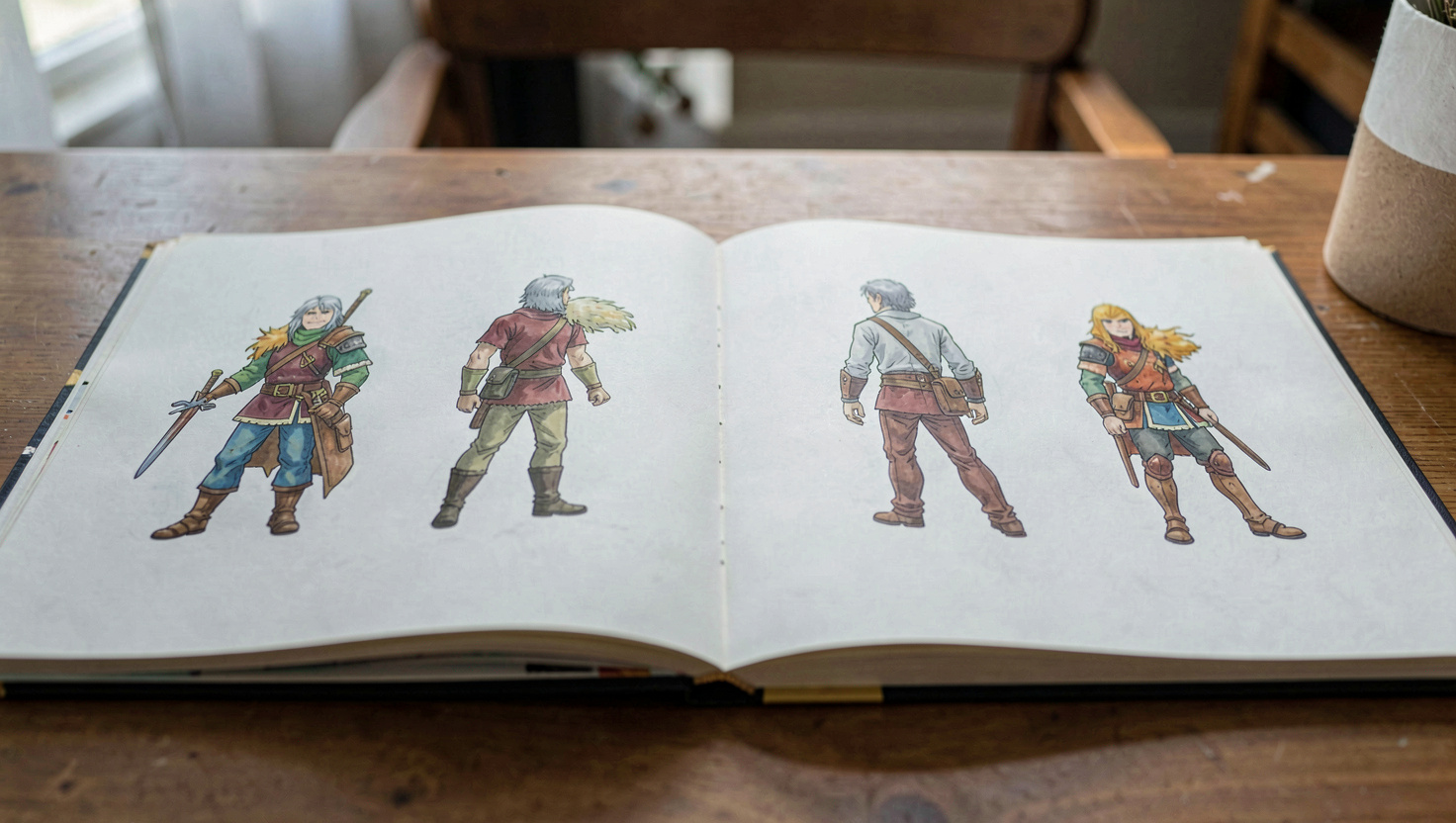
If you draw for children and you plan to query, the first thing an agent or editor will ask for is a link, not an attachment. That single fact shapes everything about how an illustrator presents work today: your portfolio has to live online, stay current, and show range. This guide lays out what a children's book illustration portfolio needs to contain, where it can live, and how it fits into a query.
Why the portfolio lives on a link
Most literary agents and publishers do not accept unsolicited email attachments, so an artist who sends image files with a query is working against the system rather than with it. The workaround is simple: host the work somewhere a stranger can click through, then put that address in your letter. Kidlit.com, a long-running advice site on children's publishing, makes this point directly in its guide to building an illustrator website: instead of attaching images, you send a link, and the recipient decides from there. The same source notes that agents and editors expect to see several examples of your work, with different composition, subject matter, tone and palette, before they can judge whether the art interests them.
What goes in the portfolio itself?
The minimum bar, as Kidlit.com describes it in its advice on illustration queries, is six to eight fully finished illustrations. Finished matters more than numerous. Beyond the count, the point is range: different styles if you have them, different compositions with some close-ups and some wide scenes, and different subjects, from settings to characters. One skill gets special weight. Faces, and the emotions they carry, sit at the center of picture book illustration, because a character who cannot look sad, surprised or delighted on the page cannot carry a story for a young reader.
When are you ready to pitch?
The same source gives a plain answer: if you do not yet have that body of finished, varied work, you are not ready to pitch, and your time is better spent making it. This is worth sitting with, because the temptation for a new illustrator is to rush the query letter while the portfolio is still thin. The letter is the easy part. A short note with an abridged resume and a link is enough for a general illustration query. What separates artists is the publishing history behind the note and the strength of the work at the end of the link, so the hours belong there.
Where the site can live
You do not need to build anything elaborate. Kidlit.com names Wix and Squarespace as the services artists gravitate toward, because they are user friendly, easy on the wallet, work across platforms and connect to your other online efforts. Squarespace gets a personal recommendation from that site's editor for ease of use, while WordPress, which she has used for over a decade, is described as having more moving parts. If even that feels like too much, the same guide offers a floor: a free Flickr gallery hosting your images and a description. It calls that the bare minimum, and adds a practical detail: link to the whole gallery in your query, so a visitor clicks through the set instead of landing on one image and stopping.
Honest scans, honest color
For artists working on paper rather than screen, the source adds a note on quality that is easy to overlook. If you use scans, they should be high quality, taken under good lighting, and true to the color scheme you intend. A muddy scan of a strong painting reads as a weak painting, and the viewer has no way to know the difference. The same page also acknowledges that not everyone is technical: hiring a freelancer through a marketplace, or asking a friend to put your image files online, are both listed as legitimate ways to get the work up. The site does not give prices for any of these options, and we will not invent them.
How the portfolio fits the author-illustrator path
An online portfolio matters doubly if you write as well as draw. Kidlit.com reports that many picture books now sell as author-illustrator projects, because a publisher deals with one creator and sees the whole package, text and art and their interplay, right in the dummy. Editors, in that account, like the tantalizing snapshot a dummy offers of the finished book. But the submission rule does not change: paste the query and the picture book text into the email, say you are an author-illustrator, and include a link to your portfolio. The dummy itself waits until someone asks for it. If you want the background on what a dummy is and who makes one, read our guide to the picture book dummy.
Two other doors exist alongside the link. One is the postcard mailing: printed cards, one to three of your top pieces on the front and contact information on the back, sent to literary agencies, artist representatives and, at publishing houses, art directors. The other is showing work where the industry already gathers. Kidlit.com points illustrators toward conferences with portfolio showcases and toward the Society of Children's Book Writers and Illustrators, a real organization with online galleries for members; the site also mentions portfolio platforms like Deviant Art, while noting the SCBWI and conferences are the most targeted to publishing. Those are that site's assessments, and we report them as such.
A way to start this month
Pick your six to eight pieces, or admit how many you still need, and list the gaps: a close-up, a wide scene, a face carrying a strong emotion. Make one finished piece that fills the biggest gap before you touch a website builder at all. When the set is real, choose the simplest home that fits your budget, whether that is a gallery template or a free account to start, and put the link at the top of your query drafts. If you are unsure how a dummy or a portfolio sits inside the wider submission picture, our guide to query letters shows where the link lands in the letter, and the first-year checklist gives you a place to schedule the whole effort.
The same discipline applies to the reference work behind the art: our piece on drawing the kilt right covers the costume research a Highland spread needs, and buying used picture books covers the working shelf the study is built on.