The Carolinas
The church library shelf: children's books outside bookshops
A congregation's library shelf is a small, self-selecting market: a few dozen titles, chosen by volunteers, read by children who arrive on Sunday morning and leave with a book.
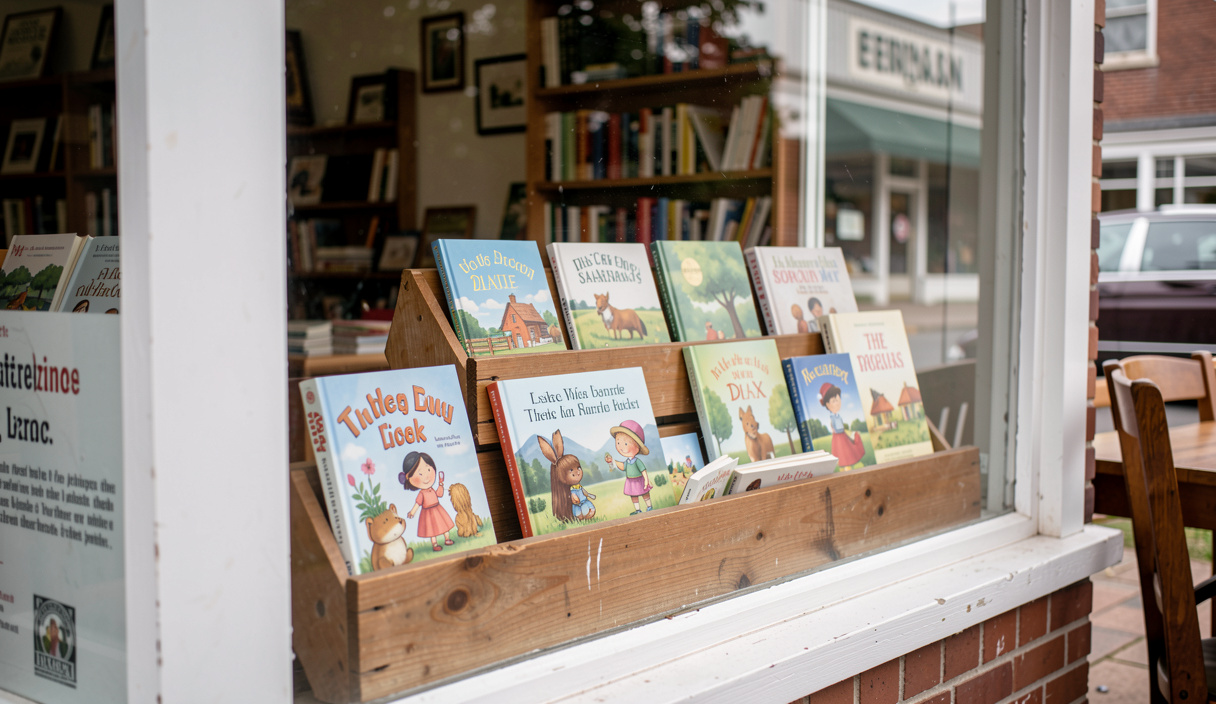
A congregation's library shelf is a small, self-selecting market: a few dozen titles, chosen by volunteers, read by children who arrive on Sunday morning and leave with a book. A writer who wants a title on that shelf should understand three things first: what the congregation believes, how its Sunday service works, and how its music shapes what children hear. The shelf is not a bookshop, and it does not behave like one.
What Lutherans believe about grace, faith and salvation?
Lutherans teach that salvation comes by grace through faith, not by anything a person does to earn it. Grace is the free gift; faith is the trust that receives it. The classic summary is the one Martin Luther set out in the Small Catechism, and the ELCA, the largest Lutheran body in the United States, states the same position in its own teaching pages.
For a children's book, this has practical consequences. A story that ends with a child earning God's love by behaving well is not a Lutheran story, however warm it reads. A story in which love arrives first, and behavior follows, is closer to the mark. Writers who want to check their instincts can read how a congregation describes its own life; a magazine such as the Pierce Avenue Journal covers Lutheran faith and worship in Macon, Georgia, in plain third person, and its explanations of grace, word and sacrament are a useful outside check on whether a manuscript is saying what the writer thinks it says.
Two more terms matter. Word and sacrament are the two means by which Lutherans understand God to act: the reading and preaching of scripture, and baptism and communion. A children's book does not have to mention either. It should not contradict them.
What happens step by step in a Lutheran Sunday service?
A typical Lutheran Sunday service follows a recognizable order, though congregations vary in details. The service usually opens with gathering, including confession and forgiveness, then moves to the word: readings from the Old Testament, a psalm, an epistle, and a gospel, with a sermon after the gospel. The congregation recites a creed, prays, and shares the peace. Then comes the meal: the offering, the great thanksgiving, the Lord's Prayer, and communion. The service closes with a blessing and a sending song.
Children's books that try to depict a service often fail on sequence. They show a sermon and a song and stop. A book that shows the shape, gathering, word, meal, sending, gives a child something to hold onto the next Sunday. It also gives the adult reading aloud a way to point at what is happening in the room.
For a writer, the practical test is simple: read the manuscript next to an actual order of service from one congregation. If the book's sequence would confuse a child who is following along, revise the sequence, not the theology.
Why do Lutheran churches sing so much, and how does a hymnal work?
Lutheran worship is sung because the tradition treats music as a form of proclamation, not decoration. Luther himself wrote hymns and encouraged congregational singing, and the practice stuck. A hymnal is not a songbook in the pop sense. It is an ordered collection: hymns arranged by season and topic, with texts, tunes, and often a separate index by tune name, first line, and topic.
That structure matters to anyone writing for children. A hymnal gives a child a first experience of reading a text that is meant to be sung by a room full of people, with a melody line and stanzas. A picture book about a hymnal can show the book itself: the ribbon marker, the numbered entries, the way a congregation finds a hymn by number on a board at the front.
Hymn texts are also a quiet source of language. Many are in the public domain, which means a writer can quote a line or two without permission, though a publisher will still want the source noted. Check the date of the text and the tune separately; they often have different authors and different copyright status.
How does a congregation choose books for its library shelf?
The shelf is usually run by a volunteer, sometimes a retired teacher or librarian, with a small budget and no acquisitions policy. In practice, three filters apply.
First, theology. The volunteer is often reading for the same things a pastor would notice: does the book treat grace as a gift, or as a reward? Does it treat baptism and communion with care, or as decoration?
Second, age fit. A church library serves toddlers through middle grade, and often adults too. A book that works for a four-year-old in a board format may not work for a seven-year-old reading alone. The volunteer is matching books to the children who actually attend, not to a national market.
Third, durability and handling. Library copies get read hard. A book with thin pages, a fragile pop-up, or a dust jacket that will not survive a year is a poor fit, however good the text.
There is a fourth filter that writers rarely consider: the shelf is often near the sanctuary, and the books are picked up before or after worship. A book that a parent can read in five minutes while a child waits is more likely to circulate than a long one.
What should a writer know before offering a title?
Start with the congregation, not the publisher. A church library is a direct market: a volunteer can say yes without a committee, and a signed copy with a short note is a reasonable way to introduce a title. Do not send a full manuscript unsolicited. Send a one-page description, the age range, the format, and a link to sample pages.
Be accurate about the tradition. If the book shows a Lutheran service, get the sequence right. If it quotes a hymn, check the text and the copyright. If it mentions communion, know that practices differ between congregations, and that a book which assumes one practice may not fit another.
Be clear about what the book is not. A children's book is not a catechism, and a church library does not need one. What the shelf needs is a story a child will ask for again, that happens to be true to the tradition the child is growing up in.
Finally, expect a slow answer. Volunteers read in the evenings and on weekends, and a reply may take a month. A short follow-up after four to six weeks is reasonable. A second follow-up is not.
The shelf is small, but it is real. A title that lands there is read aloud, in a room, by people who know the children. For a writer, that is a different kind of reader than a bookshop offers, and worth writing for.
About the source
The external reference checked for this guide is elca.org, nps.gov/ocmu/index.htm.