The Carolinas
A handwork table at a childrens book event
The signing queue is where a childrens book event goes loud and impatient. A small handwork table beside it gives children something real to do, and gives the author a crowd that leaves calm.
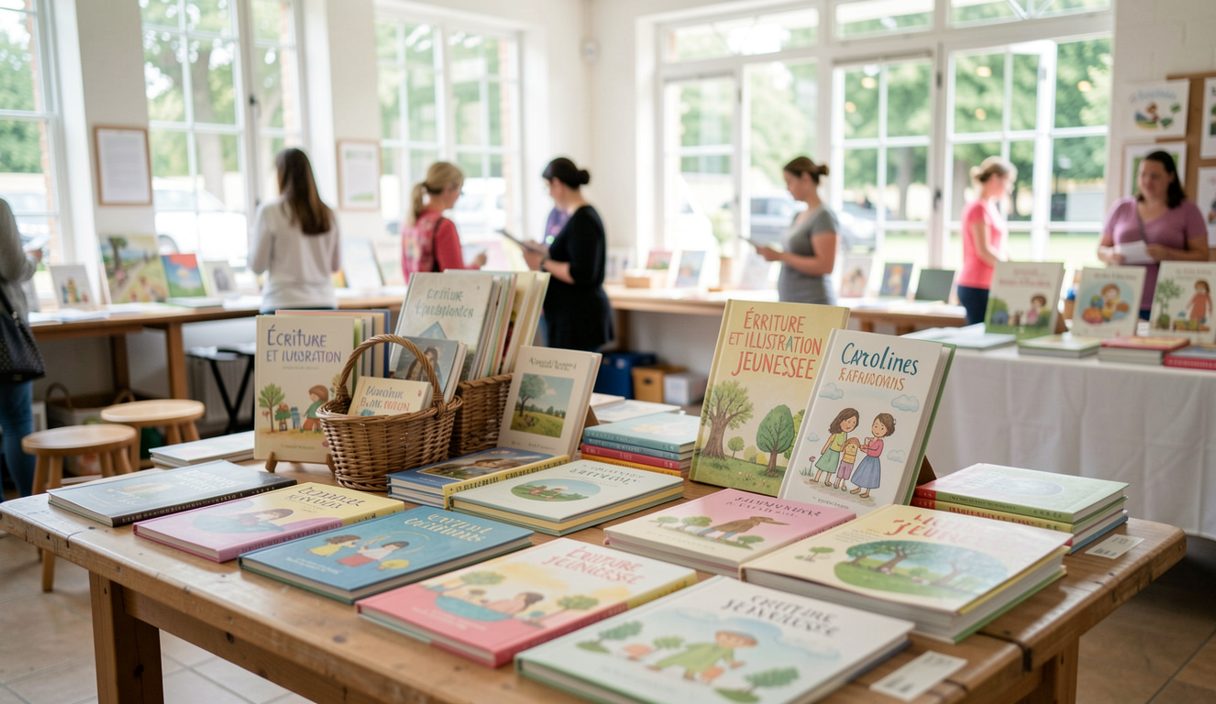
The signing queue is where a childrens book event goes loud. The children who have already had their book signed are restless, the ones still waiting are tired, and the parents are doing the arithmetic of how much longer the line will take. A small handwork table beside the queue is the oldest fix in the book: give the children something real to do with their hands, and the event's energy changes. A yarn-shop almanac of knitting and crochet, a beginner knitting class in dated entries, covers exactly this: starting a child on needles, what a first lesson looks like, what the materials should cost.
The handwork table is not a babysitting station. Done right, it is a craft encounter that a child remembers, and the almanac's teaching notes are the difference between a table that works and a table that is just clutter.
What kind of quiet activity table works near a signing queue?
The right activity is small, portable and visible in one sitting. Knitting on big needles, crochet on a simple chain, or a fibre craft with a finished sample the child can touch: the table needs a task a child can start in two minutes and carry home unfinished without losing anything. The almanac's beginner-class entries describe the ideal first project as the one with the fewest moves and the most visible result, which is also the ideal table activity.
The queue is the reason the table exists, and its pace decides the table's scale. A signing line moves at a book a minute or slower; the table needs to absorb the waiting children without becoming its own queue. The rule is one helper, one activity, and enough materials that the supply never runs dry.
How do you start a child on needles in one short sitting?
The almanac's answer is the answer a teacher gives: one move, one result, one sitting. A child who learns to make a single chain or a single row of knit stitch has learned the motion the whole craft is built on, and the goal of the table is the motion, not the product. The finished samples in the jar are the advertisement; the child who leaves knowing how to cast on is the outcome.
The cost of the table is low. Yarn in bright colours, needles sized for small hands, a helper who can demonstrate the one move, and a sign that says what the table is for. The materials list is the sort of thing a yarn shop will supply for a mention, and the almanac's shop-life entries describe the way a working yarn shop treats the teaching table as part of its job.
| Element | What it needs | What it costs |
|---|---|---|
| The activity | One move, one result | A ball of yarn and two needles |
| The helper | Someone who can demonstrate | A volunteer or the shop |
| The samples | Finished pieces to touch | The shop's stock |
| The table | Low, beside the queue, not in it | A corner of the room |
What the table teaches the event
The handwork table does something no signing line can: it gives the child a skill to take home. The book is the object, but the afternoon is the memory, and the memory of learning to knit a row beside the author's signing table is the kind the child keeps. For the bookseller it is a program that costs little and reads as generosity; for the author it is a crowd that leaves calm.
The helper is the table
The one element the table cannot do without is the person running it. The materials are cheap and the setup is simple, but the helper who can demonstrate the one move, correct the grip without taking the needles away, and send the child off with the work in hand is what makes the table a teaching station rather than a craft pile. The almanac's class notes describe the same economy: the lesson is the motion, and the teacher's job is to make the motion possible in one sitting.
The calendar the event has to fit is the subject of our piece on the school activity calendar, and the larger program the table can sit beside is in a film night for young readers. For the writer watching the room from the other side, our piece on the rules of a new room covers what a first structured table feels like from the newcomer's chair.
The table's last measure is what the child carries out: a length of chain stitch, a row of knit, and the knowledge that the hands can do the thing. A book event that sends a child home with a book and a new skill has done more than sell a title; it has made a reader who makes things, which is the reader every book in the room was written for.
About the source
The Craft Yarn Council's public standards and education pages describe the yarn weights, needle sizes and teaching conventions the table's materials list follows.