The Carolinas
Independent bookshops and the childrens shelf
A national association stands behind the independent bookshop with the train table in the corner, and its work touches the children's book you are still trying to finish.
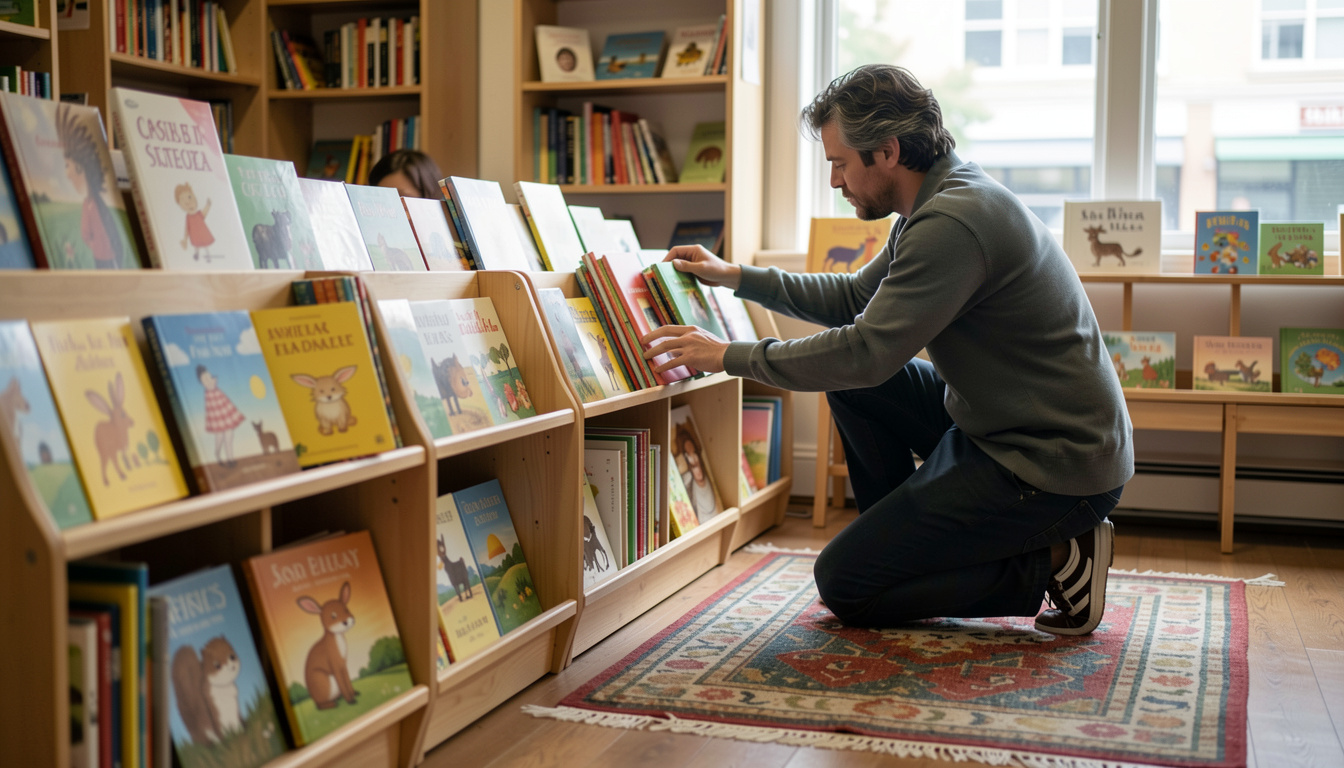
The shop with the wooden train table in the corner is not just a nice place to spend a Saturday. For someone making a children's book in the Carolinas, the independent bookstore is where your future shelf lives, and the people who stock it have a national association behind them. This guide explains what that association does, what it says about itself, and why any of it matters to a writer or illustrator who has not published yet.
The American Booksellers Association, or ABA, describes itself as a national trade association that supports and advocates for the success of independent bookstores. Its own about page, the one this guide draws on, lays out both sides of the bargain: what the association gives its member stores, and what those stores give back to their towns. Read it once and you start seeing the children's shelf differently, because everything the ABA lists about what booksellers do, from author visits to book fairs at local schools, touches the book you are trying to finish.
What the association actually provides
According to its page, the ABA gives members education, networking opportunities, advocacy, resources, and technology. None of those words are writer words, and that is the point. They are retailer words. A bookseller joining the association is signing up for help running a shop, not for help choosing manuscripts. That distinction matters when you start imagining how a book reaches a store: the buying happens through channels the association supports, but the association itself does not publish, agent, or select titles. The material does not describe any program for authors, so do not look for one there.
What the page does describe is scale and structure. The ABA says it supports over 3,200 independent bookstores. It is governed by a volunteer board elected by the membership, and members also serve on advisory councils, among them a Diversity, Equity & Inclusion Council, a Booksellers Advisory Council, and a Children's Group Advisory Council. That last one is worth noticing. Children's bookselling has its own council inside the association, which tells you the category is large enough to need dedicated representation.
Why should a pre-published writer care?
Because the list of things member stores do is, almost word for word, a list of things your book will need. The ABA page says its members support local schools through book fairs, donations and author visits; promote literacy; provide inclusive community centers; connect readers and books; add character to neighborhoods; champion and center diverse and new voices; and contribute to the local economy. Every clause there describes a hand your book could pass through. An author visit at a school is a school visit you might one day give. A book fair is a bulk sale. A shelf that centers new voices is a shelf that has room for a debut.
You can read the association's full self-description on the ABA about page, which also covers governance documents the summary here does not reproduce. It is a short page, and it is written for booksellers, so read it as reconnaissance rather than instruction.
A very old organization, by American standards
The ABA is currently celebrating its 126th anniversary, according to the page. Think about what that spans: the association predates every format you might publish in today, and it has watched the book trade reorganize itself more than once. The page itself does not narrate that history, it only points to a timeline and to reflections from some of its leaders for readers who want the long version. For your purposes, the age is a signal of stability. Stores come and go, but the infrastructure around independent bookselling has been maintained for well over a century.
The page also lists how the association runs itself in the open: board minutes, bylaws, an investment policy, a code of conduct, annual reports from 2022 through 2025, and forms filed for GuideStar. You do not need most of that as a writer. What you can take from it is that the sector documents itself, and that claims about independent bookstores can usually be checked against something published.
How does this connect to your manuscript?
Only indirectly, and it is better to be honest about that. The ABA does not read queries and does not match authors with stores. If you are at the stage of writing a query letter or deciding whether you need an agent, the association is not part of that pipeline. It sits at the far end of the process, on the retail side, after a publisher has placed your book with stores. Knowing that map keeps you from wasting effort writing to the wrong door.
Where the connection is real is in understanding the shelf you are aiming at. A store that runs school book fairs buys differently from one that does not. A store with a dedicated children's section, staffed by someone who has read the new picture books, is the environment your work will compete in. The habits that make a manuscript strong, the ones covered in revision done in passes, are the same habits that survive a bookseller skimming a stack of new titles.
What the page does not tell you
The material has limits, and saying so plainly is more useful than filling gaps. The ABA page does not publish a directory of member stores by state, so you cannot use it to count bookshops in North or South Carolina. It does not give membership dues, staff size, or a breakdown of the 3,200 figure by region or category. The complementary pages referenced in the research, the BookWeb homepage and a trade news index, carry no usable description in the material, so nothing can be drawn from them here. The annual meeting is hosted on Zoom each May, with a community forum after it, but the page does not say these are open to non-members, and you should assume they are member affairs.
None of that is a complaint. An about page is an about page. It answers who governs the association and what it claims to do, and on those two questions it is unusually forthcoming, down to posting its election guidelines and its antitrust rules.
Meeting the children's counter in person
The Carolinas have their own bookshop culture, and the association's picture of what stores do gives you a reason to go look at it with a professional eye. When you next visit an independent bookstore in your town, do not head straight for the picture books you love. Stand where a bookseller stands and read the shelf the way a retailer would: which spines face out, how the new voices are signed and shelved, what the school book fair table holds this month. You are studying the last stop of the pipeline you hope to enter.
Ask one question at the counter, and make it small: which recent picture book or middle grade novel has the staff been hand-selling hardest, and why. Hand-selling is the bookseller's word for the book they push across the counter unprompted, and the answer tells you more about the live market than any abstract advice could. If you want the wider context on how the regional scene fits together, the guide on how a regional chapter works covers the writer's side of the map.
Two newer pieces extend the bookshop's role past the shelf: buying used picture books covers the working shelf an illustrator builds from second-hand stock, and a film night for young readers covers the after-hours program a store or library can run.
BookWeb.org is the website of the American Booksellers Association, a national trade association supporting independent bookstores. Its about page states what the ABA provides members, lists its governance documents, advisory councils and annual reports, and describes what member stores contribute to their communities.